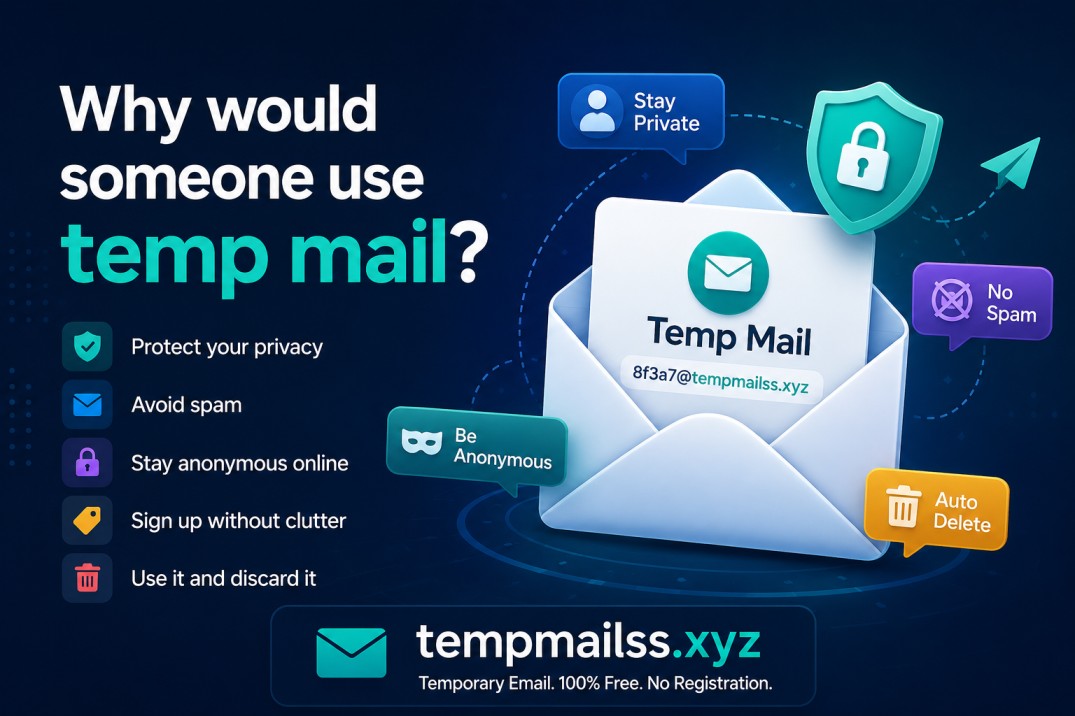
Why Would Someone Use Temp Mail? Here Are the Real Reasons
My cousin thought I was doing something
We were sitting at a coffee shop, both working on our laptops, when he glanced over and saw me pasting a weird-looking email address into a signup form. Something like z7k39m@tempmailss.xyz. He literally asked me, "Why are you using a fake email? What are you hiding?"
I had to laugh. Because the answer was so boring: I just wanted to download a free Notion template without getting fourteen emails a week about "productivity hacks."
That's it. That was the whole secret.
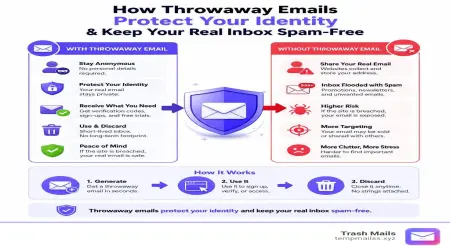
Temp mail has this reputation for being a tool for sketchy behavior, but the truth is that the vast majority of people who use it are just… tired. Tired of spam. Tired of newsletter traps. Tired of their inbox becoming a second job. If you've ever wondered why someone would bother using a temporary email address, let me walk you through the real, honest, completely undramatic reasons.
Reason #1: They've Been Burned by Spam Before
This is number one on the list because it's what gets almost everyone.
You sign up for something — a free trial, a one-time download, a webinar you're mildly curious about. You hand over your email. You get what you came for. And then the emails start. First just a welcome message. Then a "getting started" email. Then a weekly newsletter. Then a re-engagement campaign because you haven't opened anything. Then a "we miss you" email. Then a flash sale. Then another newsletter.
You didn't ask for any of this. But your real email address is now permanently lodged in some company's CRM, and short of unsubscribing from each one manually — which sometimes doesn't even work — there's no clean escape.
People who use temp mail have usually been through this exact cycle at least once. They learned the hard way that handing out your real email is a one-way door, and they decided to stop doing it for anything they're not 100% committed to.
I started using temp mail after a particularly rough stretch where I'd signed up for maybe a dozen productivity tools in one week while testing options for a freelance project. My inbox went from manageable to completely out of control in about ten days. Lesson learned.
Reason #2: They Want to Try Something Without Full Commitment
Free trials are everywhere. Software tools, membership sites, news subscriptions, streaming platforms — all of them want your email before they let you in, even for the "free" version.
The problem is that "free" is often just "free for now, and we're going to email you until you pay or unsubscribe." Perfectly legal. Also genuinely annoying.
Temp mail is perfect for this. You get access to whatever you're testing, you spend a few hours with it, you decide it's not for you, and you walk away — with zero email fallout. The temp address expires. There's no unsubscribing, no inbox damage, nothing.
I've used this specifically when comparing tools like Notion vs. Coda, or trying out newer project management apps that require account creation just to see the interface. Get in, look around, make your decision, leave clean.
Reason #3: They're Protecting Their Privacy on Unfamiliar Sites
Not every website deserves your real email address. That's just a fact.
When you land on a site you've never heard of — maybe you found it from a Reddit thread, or a random Google result — you genuinely don't know if it's reputable. You don't know if they have decent data security. You don't know if they'll sell your info. You don't know if they're going to get breached next month and your email ends up in some leaked dataset.
Giving a stranger your home address after meeting them for two minutes is weird. Giving every unfamiliar website your real email address is basically the same thing, but people do it constantly without thinking.
Temp mail creates a buffer. It says: I'll interact with you, but you don't get my real contact info until I decide you've earned it.
Reason #4: Developers and Testers Need It for Their Work
This one surprised me when I first got into freelance web development, but it makes total sense once you see it.
When you're building or testing a web app, you constantly need to create new accounts to test signup flows, password reset emails, confirmation messages, and onboarding sequences. Doing all of this with your real email is messy. Doing it with a bunch of Gmail aliases works okay but gets complicated fast.
Temp mail is genuinely the cleanest solution. Create a temp address, sign up, check that the confirmation email arrived and looks right, done. Need to test it again? Generate a new address. Takes about five seconds.
QA testers, developers, and product managers use temp mail services like tempmailss.xyz as actual professional tools — not for anything suspicious, just for doing their jobs efficiently.
Reason #5: They're Accessing Gated Content Without a Long-Term Trade
This is a big one in the content marketing world that most regular users don't think about consciously, but they experience constantly.
Ebooks. Whitepapers. Research reports. Templates. Checklists. All of this content is free — in the sense that there's no dollar price — but it costs you your email address. That's the trade.
Sometimes the trade is fair. The content is genuinely valuable, the company is reputable, and you end up glad you subscribed.
But often? You just wanted the one PDF. You have zero interest in their product. You're never going to buy from them. You just needed that resource for a project or a research task.
Temp mail lets you make that exchange without the long tail of emails you didn't want. Get the resource, move on. No hard feelings.
Reason #6: Managing Multiple Online Identities or Projects
Some people run more than one thing online — a professional portfolio, a gaming account, a side hustle, a hobby blog. Keeping all of these connected to one real email address can get messy and, depending on the context, you might genuinely not want them linked.
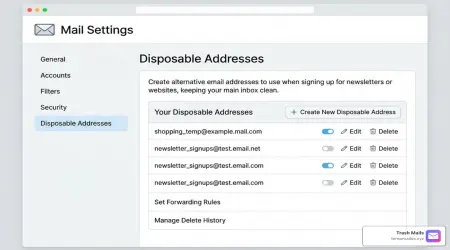
Temp mail lets you create accounts for separate projects without them all trailing back to the same personal inbox. It's not about hiding anything — it's just cleaner.
Freelancers do this. Content creators do this. People who have a work life and a personal life they'd prefer to keep separate do this.
Reason #7: They Simply Value Their Privacy
Some people aren't reacting to a past spam disaster. They haven't been burned. They just… think carefully about what personal data they share, and with whom, and they've decided that their email address is something they share deliberately — not reflexively.
This is an increasingly common mindset, and honestly a healthy one. We've all seen the headlines about data breaches, email harvesting, and companies that build behavioral profiles from your inbox activity.
Temp mail is one small tool in a broader approach to living more thoughtfully online. It sits alongside things like using a password manager, enabling two-factor authentication, and being picky about which apps you grant permissions to.
How People Actually Use It Day-to-Day
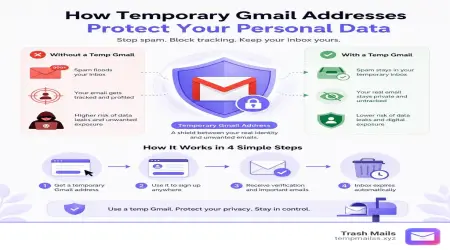
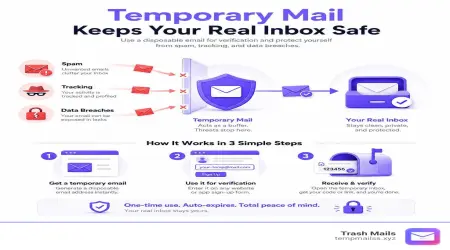
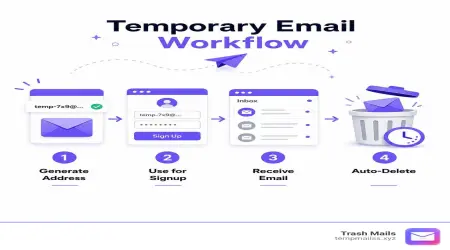
Here's what the workflow looks like in practice for most people:
Step 1: You land on a site that's asking for your email in exchange for something — access, a download, a trial.
Step 2: Before typing anything, you open a new tab and go to tempmailss.xyz. A temporary email address is already there waiting for you. No signup, no password, instant.
Step 3: You copy the address and paste it into the site's form.
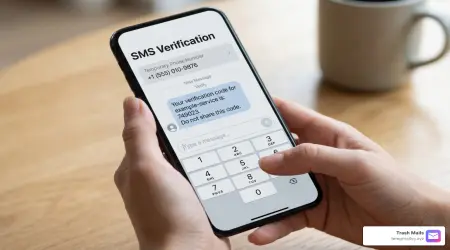
Step 4: You submit the form, then tab back to your temp mail inbox. Whatever confirmation email, OTP, or download link they send will appear there within seconds.
Step 5: You grab what you need, complete whatever action was required, and you're done. The temp address will expire on its own. You don't have to do anything else.
The whole process adds maybe 30 seconds to whatever you were doing. After the first couple of times, it becomes as automatic as reaching for a pen.
The Mistakes People Make With Temp Mail
Using temp mail is pretty hard to mess up, but a few things catch people off guard.
Using it for accounts they actually care about. This is the most common mistake. If you're signing up for something you'll want to access again — your bank, a cloud storage service, a tool you actually pay for — use your real email. You need to be able to reset your password and recover your account. A temp address that's expired can't help you do that.
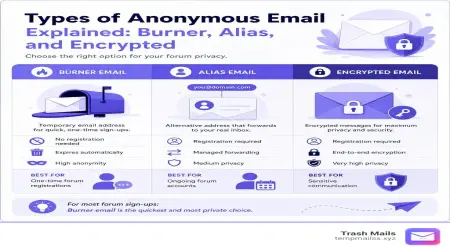
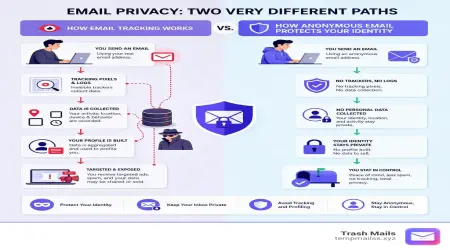
Expecting it to work as a privacy shield for everything. Temp mail keeps your inbox clean. It doesn't make you anonymous. If a site is tracking your IP address, your device, or your behavior, temp mail doesn't change that. It's an inbox tool, not a full privacy suite.
Waiting too long after signing up. Some sites send confirmation codes that expire in five or ten minutes. If your temp inbox disappears before you read the email — or if you walk away and come back later — you might miss your window. Stay nearby when you use it for time-sensitive stuff.
Treating it as a way around legitimate security. Age verification, terms of service agreements, legal requirements — those exist for real reasons. Temp mail isn't a loophole for bypassing them, and trying to use it that way creates real problems.
One More Thing Nobody Talks About
Here's something I've noticed after years of using temp mail regularly: it's actually made me more intentional about when I give out my real email.
Because I have an easy alternative, I don't default to just typing my Gmail address into everything. I pause for a second. Do I actually want to hear from these people? Is this something I'd genuinely stay subscribed to? If yes, I use my real address. If I'm unsure, temp mail.
That small moment of friction has kept my real inbox surprisingly clean. And it's made the emails I do receive feel more signal and less noise.
The people who use temp mail aren't trying to cheat the system. They're just done with the side effects of a web that treats your email address as a commodity. They found a simple fix, and they use it.
If you haven't tried it yet, give it a go next time you're facing a signup wall you don't fully trust. Head over to tempmailss.xyz, grab the address waiting there, and see how it feels to walk away from a website without leaving a trail.
Once you do it a few times, going back to handing out your real email to every random site starts to feel a little strange.
Got a use case I didn't mention? Something you've used temp mail for that surprised you? Drop it in the comments — I'm always curious to hear how other people use it.