Free Secure Private Email: Your Guide to Zero-Knowledge Inboxes
Your Inbox Is Being Watched — Here's What to Do About It
Finding a free secure private email service is one of the smartest moves you can make for your online privacy in 2026. Most people don't realize that mainstream providers scan your inbox content to build detailed profiles on you — then sell access to advertisers. In fact, the vast majority of people say they don't want their data used for personalized ads, yet that's exactly the business model powering the most popular email services.
Quick answer — the best free secure private email options in 2026:
| Service Type | Jurisdiction | Free Storage | No Phone Required | Key Feature |
|---|---|---|---|---|
| Permanent Secure Email | Privacy-friendly (e.g. Switzerland, Germany) | Limited | Often Yes | End-to-end encryption, zero-access |
| Trash Mails | — | Unlimited | No signup at all | Instant disposable inbox, zero data retained |
The problem goes deeper than ads. Around 85% of all emails are spam, and 70% of phishing emails are actually opened by their targets. Your email address is ground zero for tracking, data harvesting, and social engineering attacks.
The good news? You have real options — from fully encrypted permanent inboxes to instant disposable addresses that require zero personal information.
This guide breaks down exactly how these services work, what separates genuinely private email from marketing fluff, and which approach fits your situation best.
The Anatomy of a Free Secure Private Email Service
What actually makes an email service private? If you are using a standard consumer email account from a legacy tech giant, your messages are stored in plain text on their servers. Even if they encrypt the data "at rest" or "in transit," they hold the master keys. This means their automated systems can scan your receipts, travel itineraries, and personal conversations to train AI models and serve targeted ads.
A true free secure private email service operates on a fundamentally different philosophy: zero-knowledge architecture. Under this system, the provider has absolutely no way to read your messages.
Here are the key pillars that define a genuinely secure and private email service:
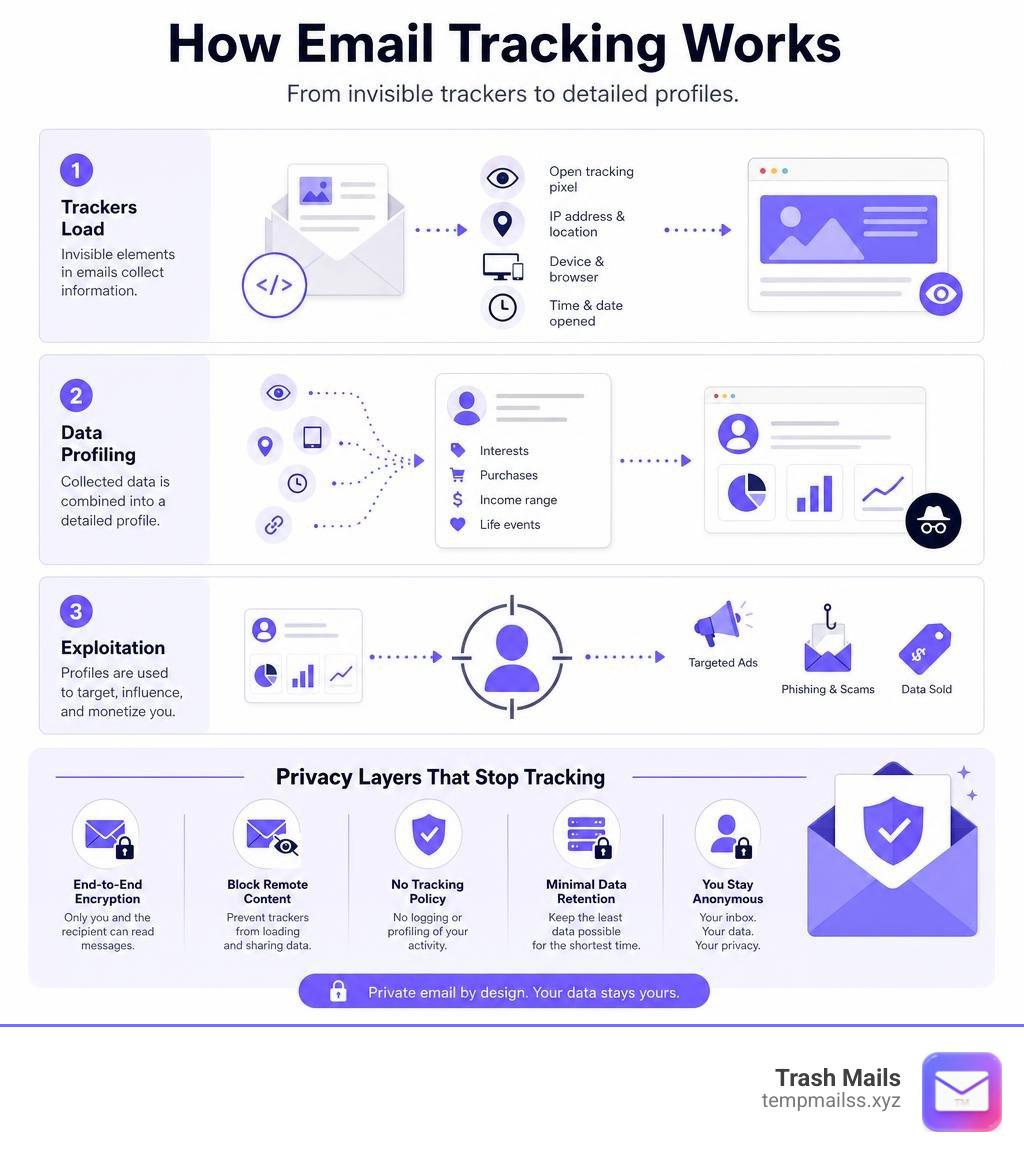
- No-Registration Requirements: Many modern privacy services allow you to sign up without providing a phone number, an alternative email address, or any personally identifiable information (PII). This breaks the link between your real-world identity and your inbox from day one.
- Zero Personal Data Retention: Private providers do not log your IP address, track your physical location, or keep metadata trails that could be used to build a digital fingerprint of your life.
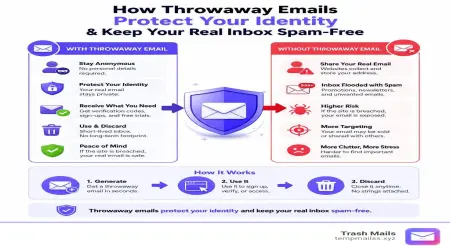
- Instant Inbox Generation: For quick tasks, signups, or untrusted websites, the ability to generate an inbox instantly without going through a tedious registration wizard is the ultimate privacy shield.
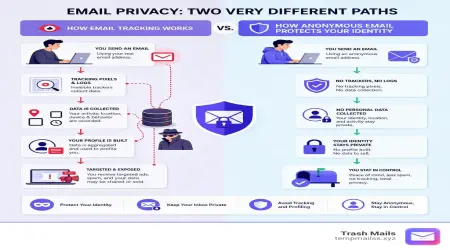
- Tracker Blocking: Mainstream emails are often loaded with invisible single-pixel tracking images. These "spy pixels" report back to senders the exact moment you opened an email, what device you used, and your approximate location. Private services strip these trackers out automatically.
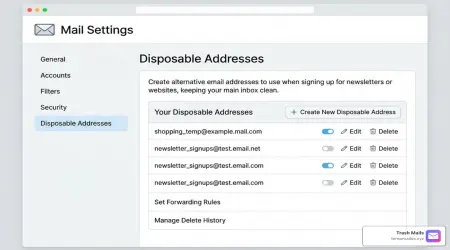
- Spam Prevention: By utilizing advanced, privacy-respecting filters and allowing you to easily generate disposable aliases, secure services keep your primary inbox clean and safe from malicious phishing links.
Key Technology: How Zero-Knowledge Privacy Protects Your Data
To understand why a secure email service is so much safer than traditional webmail, we have to look under the hood. The core technology that keeps your messages safe is End-to-End Encryption (E2EE).
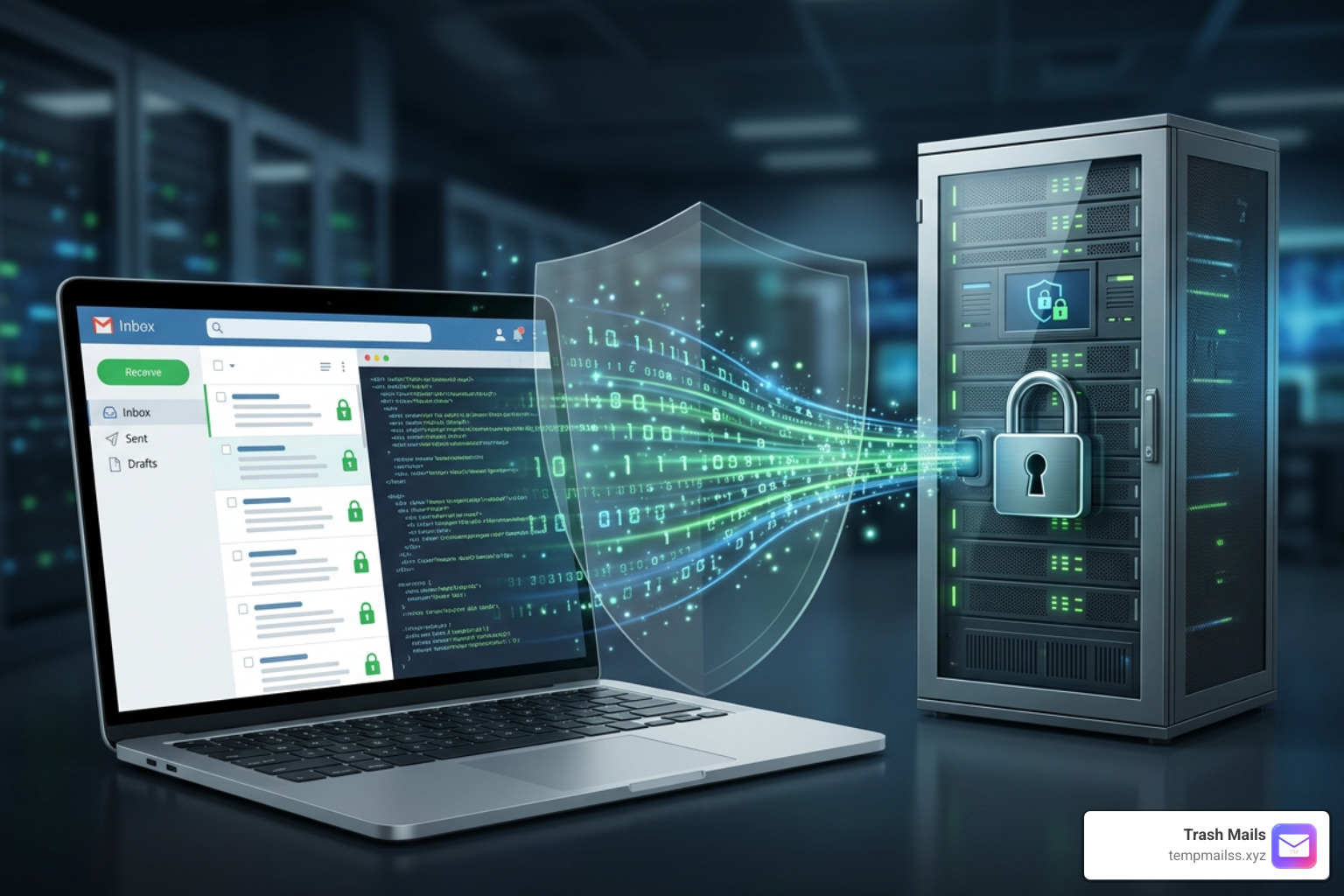
When you send an E2EE email, the message is encrypted directly on your device before it ever travels across the internet. It remains encrypted as it passes through the email servers, and is only decrypted once it reaches the recipient, who holds the matching private key.
Let's break down the technical components that make this possible:
Transport Security (TLS)
All secure providers use Transport Layer Security (TLS 1.3 is the modern standard) to secure the connection between your device and their servers. This prevents "man-in-the-middle" attacks on public Wi-Fi networks. However, TLS only protects the email while it is moving. Once it arrives at a traditional provider's server, it is decrypted. True private services combine TLS with zero-access storage encryption (like AES-256) so the data remains encrypted even while sitting on the server.
Browser-Based and App-Based Cryptography
With advanced secure webmail, encryption and decryption happen directly inside your web browser. This means your private key never leaves your device. Similarly, secure mobile apps handle the cryptographic heavy lifting locally, ensuring that the service provider only ever hosts encrypted gibberish.
Post-Quantum Cryptography
As quantum computers advance, standard encryption algorithms like RSA and ECC could eventually be cracked. Forward-thinking secure services are already implementing post-quantum cryptography (using algorithms like Kyber-1024) to ensure that your emails remain secure not just today, but decades into the future.
Automatic Data Purging and Zero-Logs Policies
A secure service must practice strict data minimization. This means keeping zero logs of IP addresses and automatically purging deleted emails. When you delete a message in a private inbox, it should be overwritten and permanently erased, rather than lingering on backup servers for marketing analysis.
Privacy Jurisdictions and Legal Protections
Technology is only half the battle. The legal jurisdiction where your email provider is incorporated and where its physical servers reside plays a massive role in your overall security.
Mainstream US-based email providers are subject to laws like the Patriot Act and FISA, which allow government agencies to issue secret warrants (like National Security Letters) demanding user data. Because these providers do not use zero-knowledge encryption, they can easily hand over your plain-text messages.
In contrast, the top free secure private email providers choose their headquarters very carefully:
- Switzerland: Outside both the US and the European Union, Switzerland boasts some of the strongest privacy laws in the world. Swiss authorities cannot force a provider to bypass encryption, and any foreign data requests must go through strict Swiss court procedures.
- Germany: Germany is governed by the Federal Data Protection Act and the strict European General Data Protection Regulation (GDPR). German courts require highly specific warrants for data access, and the country has a strong legal culture of protecting whistleblowers and journalists.
- Belgium: Operating under Belgian privacy laws, local secure providers require a direct order from a Belgian judge before sharing any limited metadata, backed by a strong legal framework protecting digital rights.
- Estonia: Estonia is a global leader in secure digital identity and operates under robust EU GDPR protections, offering excellent defense against unauthorized data surveillance.
By choosing a provider in a privacy-friendly jurisdiction, you ensure that your data is protected by law as well as by math.
Permanent vs. Temporary Inboxes: Choosing Your Privacy Strategy
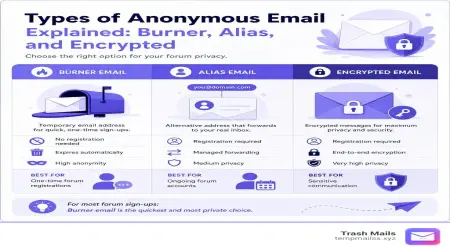
When planning your personal privacy strategy, you will quickly realize there are two main paths: Permanent Encrypted Inboxes and Temporary/Disposable Inboxes. Both are incredibly useful, but they serve entirely different purposes.
Let's look at how these two approaches compare and how to combine them for maximum protection.
The Friction of Permanent Secure Email Accounts
A permanent secure email account is perfect for your primary digital identity. This is the email you give to your bank, your close friends, and your employer.
However, running a permanent secure account comes with a few trade-offs:
- Storage Limits: Free plans are usually highly restricted. For example, many free plans offer highly restricted storage, often limited to 1 GB or less, designed only for basic personal use. If you need more space, you'll have to upgrade to a paid subscription.
- Key Management: Because these services are zero-knowledge, if you lose your password and your recovery phrase (such as the BIP39 seed phrases used by some secure providers), you lose access to your emails forever. There is no "Forgot Password" link that can decrypt your inbox for you.
- Setup Friction: Even though many of these services don't require a phone number, setting up custom domains, configuring two-factor authentication (2FA), and organizing secure folders takes time and effort.
The Power of a Temporary Free Secure Private Email for Spam Prevention
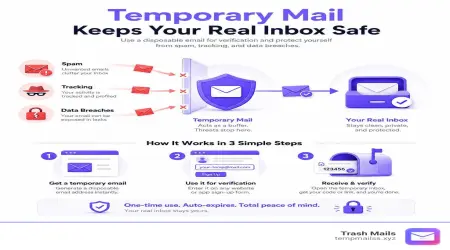
What happens when you just want to download an ebook, register for a one-time discount code, or read a paywalled article? Giving these sites your permanent secure email address is a recipe for endless spam, trackers, and potential data breaches.
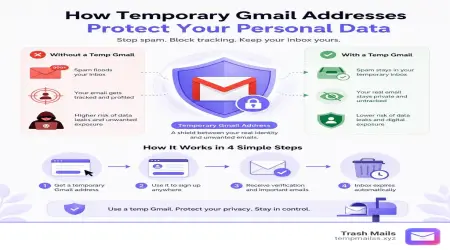
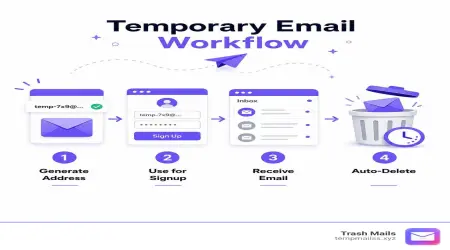
This is where a temporary free secure private email shines. By using our service at Trash Mails, you can generate an instant, fully functioning email address with zero registration. There are no passwords to remember, no seed phrases to secure, and absolutely no personal data collected.
Here is a direct comparison of how these two tools fit into your daily life:
| Feature / Use Case | Permanent Secure Email | Temporary Secure Email (Trash Mails) |
|---|---|---|
| Registration Required | Yes (Username & Password) | No (Instant Generation) |
| Primary Purpose | Long-term communication, secure banking | Spam prevention, one-time signups |
| Anonymity Level | High (Pseudonymous) | Absolute (No logs, no identity link) |
| Lifespan | Permanent | Temporary / Disposable |
| Best For | Taxes, medical records, close contacts | Newsletters, public Wi-Fi, online shopping |
By using a permanent secure inbox for your critical life accounts and a temporary inbox from Trash Mails for everything else, you build an impenetrable wall against trackers, data brokers, and spam.
Frequently Asked Questions About Secure Email
Do secure email providers require a phone number for signup?
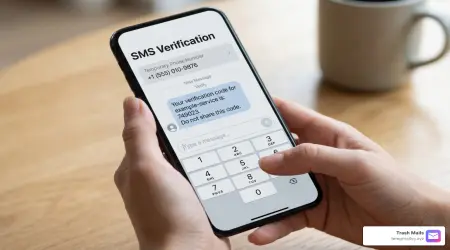
Most dedicated secure email services do not require a phone number for signup to protect user anonymity. However, some permanent providers may occasionally trigger a basic verification check (like a CAPTCHA or a temporary email check) if they detect automated bot activity during registration.
If you want to bypass registration entirely and ensure 100% anonymity without any checks, using a temporary email generator is the easiest and most reliable alternative.
How do temporary private emails protect against tracking and spam?
Temporary emails act as a buffer between your real identity and the messy public web. When a company attempts to track you using your email address across different platforms, they only see a disposable address that will soon cease to exist.
Furthermore, because these addresses are temporary, any spam, marketing emails, or phishing attempts sent to them are automatically deleted and never reach your personal devices.
Are open-source email services safer than closed-source ones?
Yes, open-source email services are significantly safer. When a provider's client applications and encryption libraries are open source, it means independent security researchers can audit the code to verify that the end-to-end encryption is implemented correctly and that there are no hidden backdoors.
Many secure email services publish their code openly and undergo regular independent audits to maintain trust. Always look for providers that back up their security claims with transparent, verifiable code.
Conclusion
Taking back control of your digital footprint doesn't have to be expensive or complicated. Whether you choose to migrate your primary correspondence to a permanent, zero-knowledge provider or simply want to keep your daily browsing clean and spam-free, utilizing a free secure private email is a massive step forward for your online safety.
If you are ready to stop funding surveillance capitalism and want to protect your inbox from the endless tide of tracking and spam, we are here to help.
Protect your inbox with Trash Mails today — generate instant, unlimited, and completely anonymous temporary email addresses with zero hassle.