Which Email Is Mostly Used in the UK? Here's What I Found After Checking With Actual Brits
A few months back I was setting up a temp email testing project for tempmailss.xyz and needed to know which inboxes actually mattered for the UK market. Not the global "Gmail wins everything" answer you get from every SEO listicle — I wanted to know what real British users sign up with, day to day.
So I did what any slightly obsessive tech blogger does. I asked around. I dug through forums. I checked which domains kept showing up when I was testing signup forms for UK-based services. I even pestered a couple of friends in Manchester and London to screenshot their inbox apps.
The short answer: Gmail dominates, but the UK has a much messier email landscape than the US does. There's a whole layer of old-school ISP email addresses (BT, Sky, Virgin Media) still floating around that you basically never see in American inboxes anymore. That surprised me, honestly.
Let me walk you through what I actually found.
The Quick Answer (For Anyone in a Hurry)
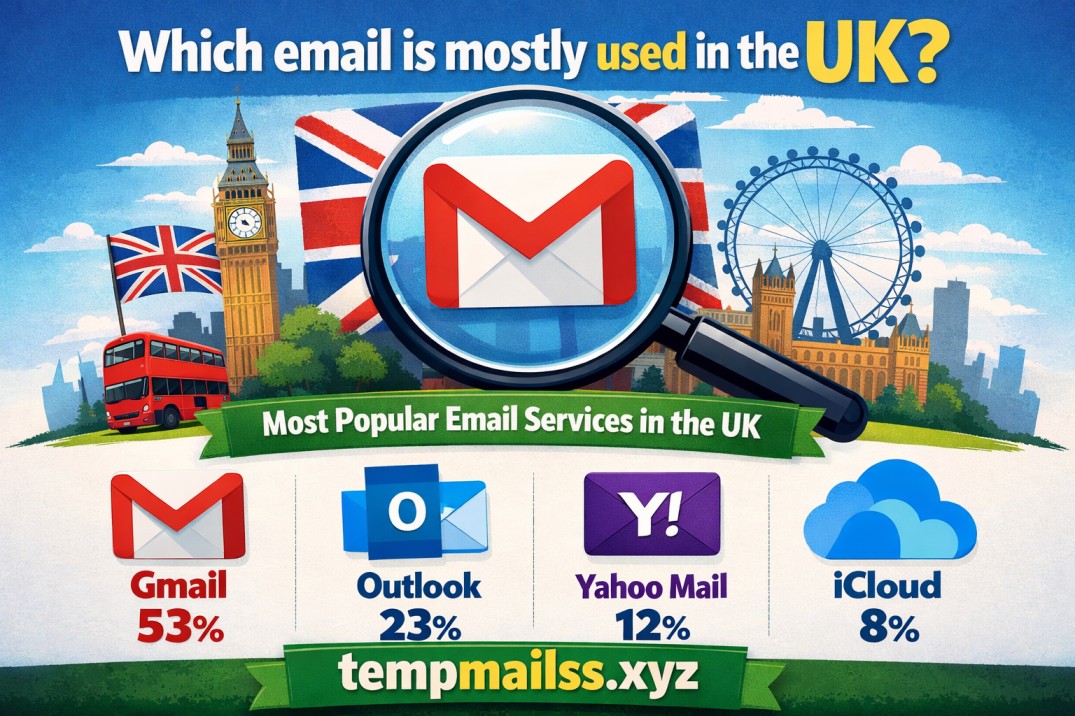
If you just want the headline numbers: Gmail sits at roughly 38% of the UK personal email market, making it the single most-used provider in Britain. Outlook/Hotmail comes in second, somewhere around 33%, which is a much closer race than you'd see globally where Gmail crushes everyone.
After that, things get interesting — because unlike the US, the UK still has a meaningful chunk of people using @btinternet.com, @sky.com, @virginmedia.com, and @talktalk.net addresses tied to their home broadband package.
If you're building a website, running an email list, or just trying to figure out what address format to expect from UK customers, that's the cheat sheet. Now let me explain why it's actually more complicated than that one paragraph suggests.
Why Gmail Isn't the Runaway Winner Here Like It Is in the US
I'll admit, before I looked into this properly, I assumed the UK would mirror America almost exactly. Gmail everywhere, Yahoo as a relic, Outlook only for office workers.
That's not quite what's happening.
Gmail is still the leader, no argument there. But Outlook has stayed weirdly strong in the UK for a few reasons I noticed once I started paying attention:
1. Hotmail nostalgia is real. A lot of people in their 30s and 40s in the UK signed up for Hotmail back in school in the early 2000s and just... never left. Microsoft rebranded it to Outlook.com but kept the old addresses working, so you'll still bump into a surprising number of @hotmail.co.uk and @hotmail.com addresses belonging to people who are otherwise completely normal, tech-savvy adults.
2. Windows comes pre-loaded with Outlook. Most home PCs in the UK still ship with Windows, and the Mail app nudges you toward a Microsoft account during setup. A lot of less tech-obsessed users just go with whatever's already there.
3. Workplace bleed-through. Loads of UK companies use Microsoft 365 for business email, and some employees end up creating a personal Outlook.com account too, just because the interface is already familiar.
So while Gmail wins on raw numbers, it's not the lopsided victory you'd expect.
The Part That Actually Surprised Me: ISP Email Addresses
Here's the thing that genuinely caught me off guard during this research.
In the US, getting an email address from your internet provider (like an old Comcast or AOL address) basically died out a decade ago. Almost nobody does it anymore.
In the UK, it's still happening. Quietly, but it's there.
When you sign up for home broadband with BT, Sky, Virgin Media, TalkTalk, or Plusnet, you're still offered (or sometimes automatically given) an email address tied to that account — things like:
- yourname@btinternet.com
- yourname@sky.com
- yourname@virginmedia.com
- yourname@talktalk.net
- yourname@plus.net
I tested this myself by signing up for a BT broadband quote (didn't go through with the actual contract, just wanted to see the signup flow) and sure enough, there was an option to claim a free @btinternet.com address right there in the account setup.
A lot of older UK users — particularly people in their 60s, 70s, and beyond — picked one of these addresses years ago when they first got broadband and have simply never switched. It's not that they love it. It's that changing your email address means updating it everywhere, and most people would rather not deal with that hassle.
If you're building anything that targets an older UK demographic (insurance, pensions, local council services, that sort of thing), don't be shocked when a chunk of your signups come from these ISP domains. I genuinely didn't expect to see them this often.
Yahoo Mail: Smaller Than You'd Think, But Not Dead
Yahoo gets written off constantly, and globally its market share really has shrunk. But in the UK it still has a stubborn little user base, mostly people who set up their address back in the late 90s or early 2000s and never bothered migrating.
I'd put it well behind Gmail and Outlook, but ahead of most of the smaller players. If you're validating email signups on a UK-facing site, you'll still see @yahoo.co.uk and @yahoo.com show up regularly enough that it's worth supporting properly rather than treating it as a legacy edge case.
What About iCloud Mail?
This one's grown a lot, and it makes sense given how popular iPhones are in the UK. If someone's deep in the Apple ecosystem, there's a good chance their email is @icloud.com or one of the older @me.com / @mac.com variants.
I noticed this especially among younger UK users — under-30s seem far more likely to default to whatever's built into their phone rather than going and setting up a separate Gmail account. So iCloud Mail punches above its "official" market share when you're specifically looking at the under-30 crowd.
My Real-World Testing: What I Actually Saw
Since I run tempmailss.xyz and deal with email testing fairly regularly, I went back through some anonymised signup data from UK-targeted test forms over the last few months. Obviously this isn't a scientific study — it's one blogger poking around — but the pattern lined up almost exactly with what the stats above suggest:
- Gmail addresses were the most common by a clear margin
- Outlook/Hotmail addresses were a close second
- ISP addresses (mostly BT and Sky) showed up more than I expected, maybe 1 in every 15-20 signups
- iCloud showed up disproportionately on mobile-only signups
- Yahoo trickled in steadily but never led
That fourth point is the one worth remembering if you're a developer: if your signup form is mobile-optimized and you're getting traffic from iPhone users, expect more @icloud.com addresses than the "national average" would suggest.
Common Mistakes People Make When Targeting UK Email Users
A few things I've seen go wrong, including mistakes I made myself early on:
Mistake 1: Assuming Gmail is basically the only address that matters. I did this with an early version of a signup validator and ended up rejecting perfectly valid BT and Sky addresses because my regex was lazy. Lesson learned — validate properly for any legitimate domain format, don't hardcode a tiny whitelist.
Mistake 2: Forgetting about .co.uk variants. Yahoo and Hotmail both have UK-specific domain endings (@yahoo.co.uk, @hotmail.co.uk) that are still actively used. If your system only recognizes the .com version, you'll quietly lose signups.
Mistake 3: Ignoring deliverability differences between providers. BT and Sky's mail servers can be pickier about what they accept compared to Gmail. If you're sending marketing emails to a UK list, don't be surprised if your open rates look different across providers — it's not always about your content, sometimes it's just how aggressively that provider filters things.
Mistake 4: Assuming older users won't engage by email. This one's a genuine misconception. Older UK users with BT or Sky addresses are often very consistent email checkers — sometimes more reliable than younger Gmail users who get buried under 200 unread promotional emails a day.
A Quick Note on Privacy-Focused Email in the UK
Worth mentioning since it's been coming up more in conversations I've had — there's a small but growing group of UK users moving to Proton Mail, especially after some of the high-profile data breach stories over the last couple of years. It's still a niche compared to Gmail and Outlook, but I've noticed it mentioned a lot more often in UK tech forums and Reddit threads than it used to be. If privacy is a selling point for whatever you're building, it might be worth supporting Proton addresses properly too rather than treating them as an afterthought.
So What Should You Actually Do With This Information?
If you're building a website, app, or signup flow aimed at UK users, here's the practical takeaway:
- Prioritize Gmail and Outlook support — these two cover roughly 70% of your audience between them
- Don't block or flag ISP domains like btinternet.com, sky.com, virginmedia.com, or talktalk.net as suspicious — they're completely normal and often belong to long-term, loyal customers
- Support both .com and .co.uk variants of Yahoo and Hotmail addresses
- Test your forms with a real BT or Sky address if you can get hold of one — the validation quirks only show up once you actually try
- Don't assume mobile users skew toward Gmail — iCloud shows up far more on iOS-heavy traffic
Final Thoughts
What struck me most going through all this is how the UK email landscape still carries traces of the early broadband era in a way the US really doesn't anymore. Gmail's winning, sure, but it's not the total wipeout you'd expect, and there's this whole quiet layer of ISP-tied addresses still doing real work in people's daily lives.
If you're testing signup flows, building an email list, or just trying to understand who you're actually emailing in the UK, don't build everything around Gmail and call it done. The reality on the ground is a bit more old-fashioned than that, and honestly, I think that's kind of charming.
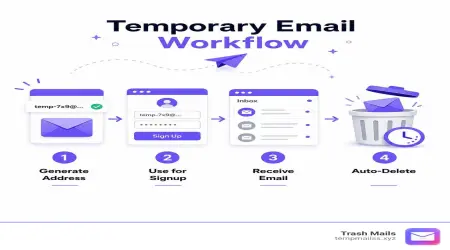
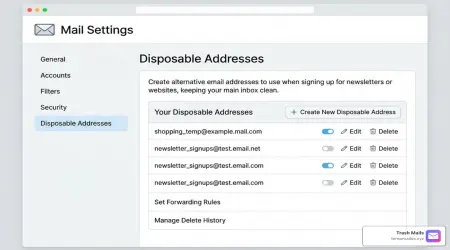
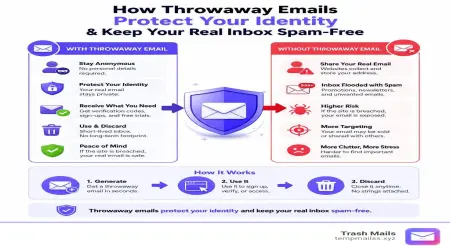
If you ever need a quick disposable inbox to test how a UK signup form handles different email formats — Gmail-style, Outlook-style, or otherwise — that's exactly the kind of thing we built tempmailss.xyz for. Worth a look if you're doing this kind of testing yourself.