What Is Temporary Email?
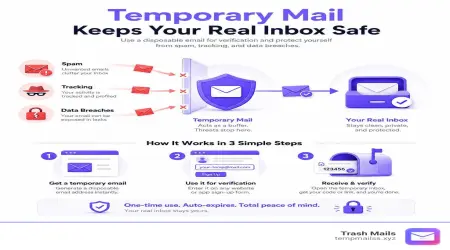
A few years back, I signed up for a free trial of some random productivity app. Nothing major — I just wanted to try it out. Within 48 hours, my inbox was flooded with promotional emails, newsletter subscriptions I never opted into, and one day later, what looked suspiciously like a phishing attempt.
All from one signup.
That was the moment I started taking inbox hygiene seriously. And that's when I stumbled onto temporary email — something I now use almost every week without a second thought.
So, What Exactly Is a Temporary Email?
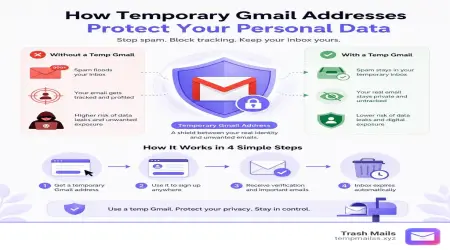
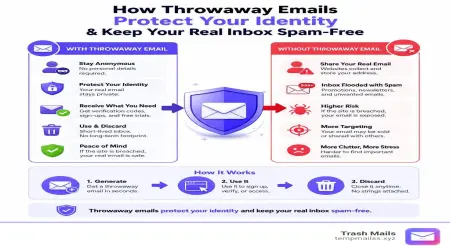
Think of it like a disposable coffee cup. You use it once (or a few times), and when you're done, you throw it away — no mess, no commitment.
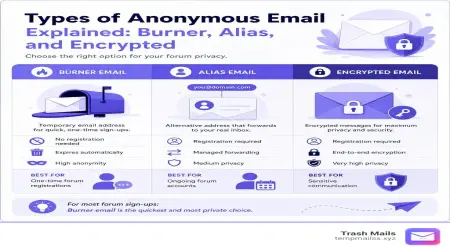
A temporary email (also called a disposable email, fake email, or throwaway email) is an email address that you can create instantly, use for a specific purpose, and then discard — usually without signing up for anything or giving away your real identity.
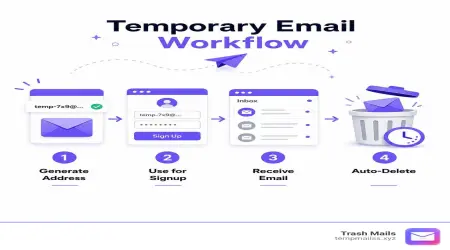
You go to a site, an address is generated for you automatically, and you get a working inbox right there in your browser. Any email sent to that address shows up instantly. When you're done, you just close the tab.
No password. No account. No trace.
The Services That Actually Work (I've Tried Them)
There are dozens of these services out there, but honestly, a handful stand out:
Temp Mail (temp-mail.org)** — This is the one I use most. It generates an address the moment you open the site. The inbox refreshes automatically, and you can even extend the session or copy the address with one click. Simple, fast, clean.
Guerrilla Mail (guerrillamail.com)** — A bit older-looking, but rock-solid. You can even send emails from it, which is handy in rare situations. Also lets you choose from multiple domains.
Mailinator** — Mostly used by developers and testers. The inboxes are public by default (anyone who knows the address can read them), so don't use it for anything you want kept even remotely private. Great for quick app testing though.
10 Minute Mail** — The name says it all. The address expires after 10 minutes, though you can extend it if needed. Good for quick one-off signups.
YOPmail** — Persistent inboxes that don't expire easily. Useful when you expect follow-up emails over a few days.
All of these are free. None of them require you to hand over any personal information.
---
Real Situations Where I Actually Use This
When a site forces you to "create an account" just to read one article
We've all been there. A recipe site, a research paper, a news article — and suddenly you hit a wall asking for your email. I use a throwaway address, get whatever code or link they send, and I'm in. Done. My real inbox stays clean.
Downloading free tools, plugins, or templates
Designers and developers, you know this pain. You find a great free icon pack or a WordPress theme, and they want your email to send the download link. Fine. Temporary email handles it without any guilt or consequences.
Testing forms and email workflows
If you build websites or apps, this one's huge. Instead of creating ten fake accounts with variations of your real email (the old `yourname+test1@gmail.com` trick), you spin up fresh disposable addresses instantly. Much cleaner.
Signing up for "free trials" with sketchy cancellation terms
I'm not proud of this one, but I've been burned before by free trials that auto-charged me. Some services make it deliberately difficult to cancel. Using a temporary email doesn't stop the charge (your payment info is separate), but it does mean you won't miss the cancellation deadline buried in an email you never received because it went to spam.
How to Use a Temporary Email — Step by Step
It's almost embarrassingly simple, but here's the full walkthrough:
**Step 1:** Open your browser and go to temp-mail.org (or any service you prefer).
**Step 2:** You'll see a randomly generated email address already waiting for you. Something like `zxb7q9@yopmail.com`. Copy it.
**Step 3:** Paste that address into whatever signup form or field is asking for your email.
**Step 4:** Complete the signup, then go back to the temporary email tab. Your inbox will show any emails sent to that address — confirmation codes, download links, whatever you're expecting.
**Step 5:** Use what you need. Then close the tab.
That's genuinely it. No account, no login, no cleanup required.
---
Mistakes I Made (So You Don't Have To)
Using it for anything important.** This sounds obvious, but when you're in a hurry, you might accidentally use your throwaway address for something that actually matters — like a bank account, a government portal, or a platform you'll want to log back into. If you ever lose access to the temp address (and you will), you lose the ability to reset your password. Use it only for throwaway signups.
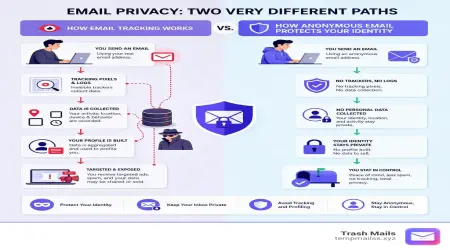
Assuming it's totally anonymous.** Your IP address is still visible to websites. Temporary email hides your identity *from the website's mailing list*, not from their servers entirely. If you need real anonymity, you'd pair this with a VPN — but for most everyday use cases, the email protection alone is plenty.
Expecting attachments to always work.** Most temporary email services can receive plain emails fine, but some handle attachments inconsistently. If you're expecting a file, check that it actually arrived before leaving the page.
Not refreshing the inbox.** A few services don't auto-refresh. If you're waiting on an email and nothing shows up, try hitting refresh manually. I've wasted minutes waiting on what was already sitting there.
Are These Services Legal and Safe?
Yes — completely legal to use. Temporary email is no different from setting up a secondary Gmail account; you're just not the one managing the server.
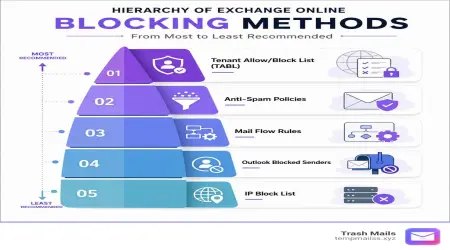
That said, some platforms actively block disposable email domains. Reddit, for example, rejects many of the common ones. Same with some banking and government sites. If a site blocks your temp address, it's not the end of the world — it usually just means they require a "real" email, which is fair.
As for safety: you're not putting sensitive data into these inboxes, so there's little to expose. Just don't send or receive anything confidential through a throwaway — these inboxes are often accessible to anyone who knows the address.
When You Shouldn't Use Temporary Email
Let's be real about the limits:
- **Two-factor authentication (2FA):** If you use a temp email for a service that sends 2FA codes, you'll be locked out the moment the inbox expires.
- **Account recovery:** No temp email means no way to recover the account if you get logged out.
- **Professional signups:** If you're signing up for something work-related or something you'll actually use long-term, use a real address. The inbox hygiene isn't worth losing access later.
- **Legal or financial platforms:** These often require verified, permanent email addresses anyway.
One Thing That Changed How I Think About This
Before I started using temporary email regularly, I had this feeling that every signup was a small gamble. Would this company sell my data? Would they spam me forever? Would I regret it?
Temporary email removed all of that friction. I explore more freely online because I know my real inbox won't pay the price.
It's a small tool. But the peace of mind it gives you — knowing your primary email is reserved for things that actually matter — is disproportionately large.
If you've never tried it, open a tab right now, go to temp-mail.org, and try it with the next throwaway signup you encounter. You'll immediately understand why people who know about it use it without thinking.
It's one of those things that makes you wonder why it took so long to find out about it.
Have a question about privacy tools or email management? Drop it in the comments — always happy to share what's actually worked in practice.*