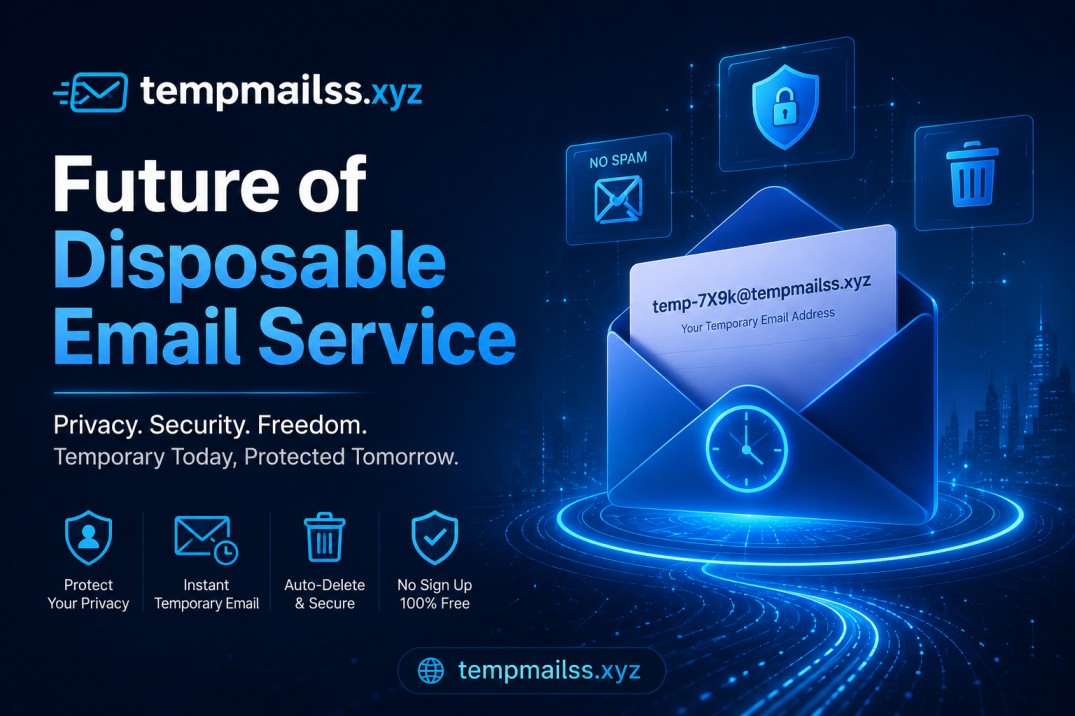
The Future of Disposable Email Services — What's Coming and Why You Should Care
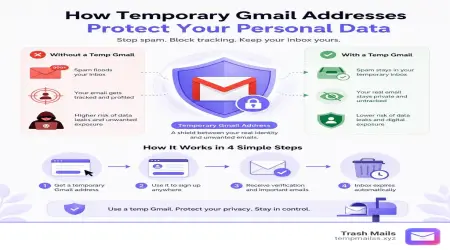
I still remember the first time I got burned by giving out my real email address.
It was a PDF download from some random "digital marketing tips" website. Looked legit. I punched in my Gmail, grabbed the PDF, and thought nothing of it.
Within 72 hours, I was drowning in newsletters I never signed up for. Then came the "exclusive offers." Then the upsell emails. Then the weird stuff from third-party partners I'd never heard of.
That was my introduction to the dark side of the internet's email economy — and it's what eventually led me to discover disposable email services. Years later, I've used them for everything from testing apps to signing up for shady coupon sites. And lately, I've been thinking a lot about where this whole space is headed.
Spoiler: it's getting way more interesting than just “fake inbox for spam.”
Why Disposable Email Isn't Going Anywhere
Here's what most people don't realize: the demand for temporary email isn't shrinking — it's exploding.
Think about how the internet has changed in the last five years. More subscriptions. More paywalls. More "create an account to read this article." More apps demanding your email before you've even seen the product. Every single one of those friction points is a moment where someone wants to protect their real identity.
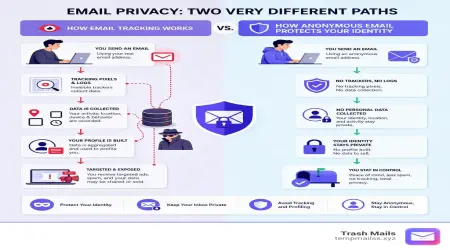
And it's not just privacy nerds or hackers using temp mail anymore. Regular people — teachers, freelancers, small business owners, retirees learning to use apps — are figuring out that their email address is basically a tracking ID. Once that clicks for someone, they never go back to giving it out carelessly.
The services themselves have also gotten much better. When I first started using them, it was basically "here's a random inbox, it lasts 10 minutes, good luck." Now you're seeing features like:
- Custom domain selection
- Inbox refresh and extended expiry
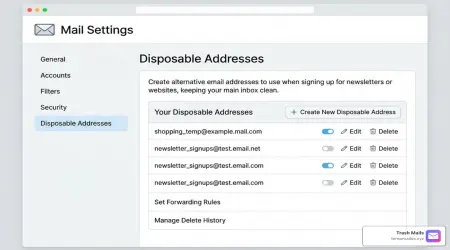
- Multiple aliases from one session
- Mobile-friendly interfaces
- API access for developers
That evolution isn't stopping. It's accelerating.
What's Actually Changing — and Fast
1. AI-Powered Spam Detection is Forcing Temp Mail to Adapt
A lot of websites have gotten smarter about sniffing out disposable email addresses. They maintain blocklists of known temp mail domains and reject signups from them outright. You've probably seen this yourself — "Please use a valid email address" — even though your address was perfectly valid for your purposes.
This has kicked off a kind of arms race. Temp mail providers are responding by rotating domains more frequently, offering addresses that look more like real ones, and in some cases letting users bring their own custom domains. The providers who don't adapt to this are quietly dying off.
The future here is clear: disposable email services will get better at mimicking legitimate email infrastructure. Not to deceive people in harmful ways, but to preserve the fundamental function — protecting your identity from data-hungry websites.
2. Privacy Laws Are Actually Helping
GDPR in Europe, CCPA in California, and a growing list of similar laws around the world have done something unexpected: they've made people more aware of their data rights. When someone reads "your email may be shared with third-party partners" in a privacy policy for the first time and actually understands what that means, they start looking for workarounds.
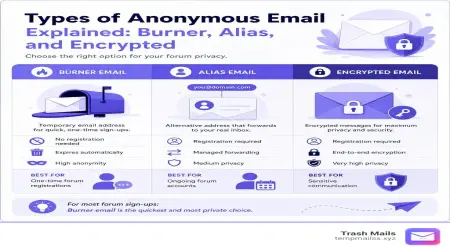
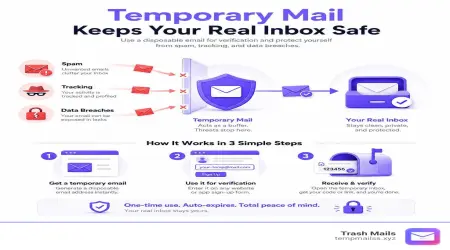
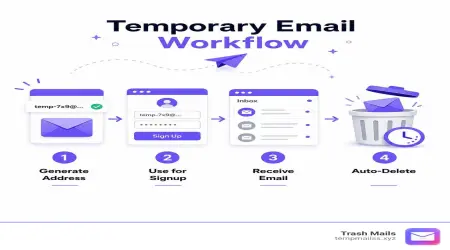
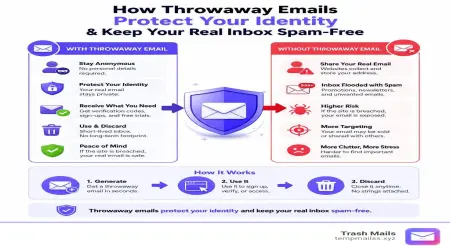
Disposable email services are the most accessible workaround most people will ever find. You don't need to install anything. You don't need to be technical. You just go to a site like tempmailss.xyz, grab an address, and use it.
As privacy awareness grows — especially among younger internet users who've grown up hearing about data breaches — the audience for temp mail is only going to get bigger.
3. The Developer Use Case is Exploding
This one surprised me when I first noticed it.
I was in a developer forum a while back, and someone asked how everyone handles email testing in their CI/CD pipelines. A huge portion of the answers mentioned disposable email APIs. Developers are using temp mail programmatically — pulling in temporary addresses via API, using them to test onboarding flows, verifying email confirmation logic, stress-testing messaging systems.
This is a completely different use case from what most people picture when they think "disposable email," and it's growing fast. As more apps are built with email as a core interaction layer, developers need reliable, cheap, fast ways to spin up test inboxes. Temp mail services that offer solid APIs are going to clean up in this segment.
4. Integration With Browser Extensions and Password Managers
Right now, most people use disposable email by opening a separate tab, grabbing an address, copy-pasting it into a form, and then going back to check the inbox. It works, but it's clunky.
The next wave is going to be much tighter integration with the tools people already use. Imagine a browser extension that auto-generates a temp address whenever it detects an email field, saves the inbox link, and notifies you when mail arrives — all without leaving your current tab. That's not science fiction. Prototype versions of this already exist.
Password managers are another natural fit. Some are already experimenting with email alias features. The line between "password manager" and "identity protection suite" is blurring, and disposable email sits right at the center of that blur.
How I Actually Use Temp Mail — Practical Scenarios
Let me share what this looks like in day-to-day use, because theory is less useful than reality.
Signing up for free trials: Software companies love collecting emails even for trials of their product. I use a temp address every single time. If the product is good and I want to keep using it, I'll sign up properly. If not, no harm done.
Downloading resources: White papers, eBooks, templates — anything that requires an email to download gets a temp address. I've gotten so used to this that it's muscle memory now.
Testing my own apps: When I'm building something with email notifications, I'll spin up five or six temp inboxes to test different scenarios. Way faster than creating dummy Gmail accounts.
Sketchy coupon sites: You know the ones. "Enter your email for 20% off." Sometimes the discount is real. Sometimes it's a list-harvesting operation. Temp mail handles both cases equally well.
One-time forum access: Some forums or communities require email verification but I have no intention of coming back. Perfect temp mail situation.
Mistakes I Made Early On — So You Don't Have To
Using temp mail for accounts I actually care about. This sounds obvious, but when I was newer to this, I used a disposable address to sign up for a service I ended up really liking. When I lost access to the temp inbox, account recovery became a nightmare. Keep temp mail for throwaway situations only.
Not checking the inbox quickly enough. Some services send a verification email and then the link expires in 15 minutes. If your temp inbox automatically deleted after 10, you're stuck. Always check how long your chosen temp address will stay active.
Assuming all temp mail services are equal. They're really not. Some have terrible uptime. Some get flagged immediately by websites. Some have zero privacy themselves — they log everything. I've settled on a handful I trust, and tempmailss.xyz is one I keep coming back to because it's fast, clean, and doesn't make me jump through hoops.
Forgetting to save important emails. If you're using a temp inbox and receive something you might need later — a receipt, a verification code, account details — copy it somewhere else before the inbox expires.
The Bigger Picture: Identity on the Internet
Here's where I think this is all heading at a philosophical level.
The current model of internet identity is broken. Your email address is simultaneously your username, your identity verification tool, your communication channel, and your tracking ID. That's too much for one thing to be.
Disposable email is a band-aid on this problem, but it's a useful one. And as the internet matures, I think we'll see more sophisticated solutions emerge — things like email aliasing built into operating systems, decentralized identity protocols that don't require a permanent email at all, and AI-managed "identity layers" that automatically create and maintain separate digital personas for different contexts.
Temp mail services that are smart will be part of that ecosystem. Those that stay stuck in "here's a random inbox" mode will fade out.
The ones building toward privacy-first, developer-friendly, integration-ready platforms? They've got a real future.
What to Look For in a Disposable Email Service Right Now
If you're trying to figure out which temp mail service to actually use, here's what I actually look at:
Speed: The inbox should load fast and receive emails almost instantly. If there's a noticeable delay, the service is probably overloaded or poorly built.
No-registration required: The whole point is convenience. If a temp mail service requires you to create an account, that defeats the purpose.
Domain variety: Some websites block the most common temp mail domains. A service that offers multiple domain options gives you a fallback when one gets blocked.
Clean interface: This matters more than people admit. If I'm in a hurry (and I usually am), I don't want to wrestle with a cluttered UI.
Reasonable inbox lifespan: Ten minutes is often too short. A service that gives you at least an hour, with the option to extend, is much more practical.
Privacy policy that isn't scary: Yes, read it. Some temp mail services log your usage data and sell it — which is hilariously ironic given why people use temp mail in the first place.
Where This is All Going
Five years from now, I think disposable email will be considered a basic internet hygiene practice — like using a strong password or enabling two-factor authentication. It'll be built into browsers. It'll be a standard feature of email clients. Teachers will explain it to students as part of digital literacy.
The services that exist today are building the foundation for that future. The rough edges are getting smoothed out. The technology is getting more sophisticated. And the public's understanding of why this matters is finally catching up.
If you haven't started using a disposable email address as part of your regular internet routine, there's no better time to start. The tools have never been better, and the reasons have never been more obvious.
Your real inbox will thank you.
Want to try a disposable email address right now? Head over to tempmailss.xyz — no signup, no BS, just a working inbox in seconds.