How Long Does a Temp Email Last?
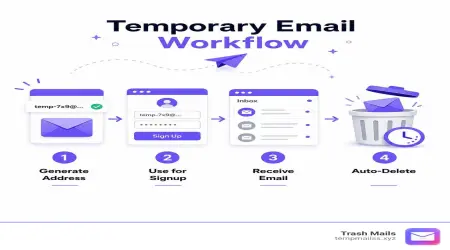
Picture this: you're trying to download a free Figma template. The site wants your email before they'll hand it over. You think, "Perfect, I'll use a temp mail" — grab a disposable address, paste it in, hit submit.
Then you wait for the confirmation link.
And wait.
You switch tabs, check something else, come back five minutes later — and the inbox is gone. The address expired before the email even arrived. Now you're stuck, the download page timed out, and you're starting over.
That happened to me more than once before I actually took the time to understand how temp mail expiration works. Turns out it's not as random as it feels — there's a logic to it, and once you get it, you stop losing emails at the worst possible moment.
The Short Answer (And Why It's Complicated)
Most temp email addresses last anywhere from 10 minutes to 48 hours.
But here's the thing — that range is almost useless without context, because the actual lifespan depends entirely on which service you're using and sometimes even how you're using it.
Some services are aggressive about cleanup and wipe inboxes after 10–15 minutes of inactivity. Others are more relaxed and keep addresses alive for a day or two. A few let you extend the session if you're still actively using it. And some — especially the better ones — give you a fixed window with a clear countdown so you're never guessing.
Let's break it down properly.
How Different Temp Mail Services Handle Expiration
The "Quick Burn" Type (10–30 Minutes)
These are services designed for speed — get in, grab your verification code, get out. The address disappears fast, which is great for privacy but rough if the email you're waiting on takes a while to arrive.
I've been burned by these when using them for newsletter confirmation emails, where the sender batches their outgoing mail and sometimes delivers 20–30 minutes after signup. By the time the email arrives, the inbox is history.
Best for: OTP codes, instant verification links, things that arrive within seconds or a couple of minutes.
The "Session-Based" Type (Active Until You Close It)
Some services keep your address alive as long as you have the browser tab open. The moment you close the tab or the session times out from inactivity, the inbox is cleared.
These are actually pretty practical for short tasks. If you're sitting there doing a signup flow, you'll have everything you need. The problem is when you open a temp mail tab, get distracted, and come back to find it's reset because you were idle for too long.
Best for: Situations where you're doing everything in one sitting and won't walk away mid-process.
The "Fixed Window" Type (1 Hour, 24 Hours, 48 Hours)
These give you a defined timeframe — you know exactly when the clock runs out. Some will even show a countdown timer. This is my personal preference because there's no guessing involved.
Services like tempmailss.xyz tend to give you a reasonable window that covers most use cases without leaving your inbox sitting around forever.
Best for: Situations where you might need to check back later, or when the email you're expecting might take a while.
The "Extendable" Type
A few services let you manually refresh or extend the lifetime of your temp address. If you need more time, you click a button and the clock resets. This is a nice feature when you're not sure how long a process will take.
Best for: Multi-step verifications, situations where you're waiting on a slow sender.
What Actually Triggers the Expiration?
This is something I didn't think about at first, but it matters. Depending on the service, the inbox might expire based on:
Time since creation — The simplest model. The address was created at 3:00 PM, and it dies at 4:00 PM. Doesn't matter if you've been using it or not.
Time since last activity — The session stays alive as long as you're interacting. Stop checking the inbox, and it starts a countdown. Come back in time and it resets. Miss the window and it's gone.
Browser session — Some services tie the address to your browser session. Refresh in the same tab and you're fine. Open a new window or clear your cache and the address is gone.
Server-side cleanup — Some platforms do batch cleanups every few hours. Your address technically "exists" but gets swept up in the next purge.
Knowing which type you're dealing with tells you exactly how to behave when using it.
Real Situations Where the Timing Caught Me Off Guard
The slow-sending newsletter platform: I was signing up for a content marketing tool that sent their welcome email through some clunky third-party system. Took about 25 minutes to arrive. I was using a 10-minute temp mail. Never got the email. Had to use a different service with a longer window and try again.
The "check your inbox" redirect: Some sites redirect you to a page that says "check your email to continue" — and just leave you sitting there. Meanwhile your temp mail is counting down. If the site has any delivery delay, you're racing the clock you didn't know was running.
The delayed OTP: A web app sent a one-time password that I needed to complete registration. The password arrived fine — but I didn't notice it right away. When I went to actually use it, the temp inbox had been cleared, and I couldn't reference the OTP format for a second attempt. Minor annoyance, but annoying.
Multi-step onboarding: Some platforms send multiple emails — a confirmation, then a welcome email, then a "getting started" guide. If you need info from the second or third email, you need a temp address that'll survive long enough to receive all of them.
How to Choose the Right Temp Mail Lifespan for Your Situation
Here's a practical guide based on what you're actually trying to do:
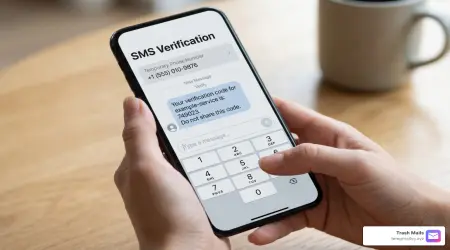
Need a quick verification code or OTP? Any temp mail works. Even a 10-minute address is more than enough. The code arrives in seconds.
Signing up for a free trial or tool you want to test briefly? Go with something that lasts at least an hour. Give yourself breathing room in case the confirmation email is slow.
Downloading a gated resource (PDF, template, ebook)? A 30-minute to 1-hour window is usually plenty. The delivery is typically quick, but you want buffer time.
Testing a multi-step registration flow? Use a service that gives you a full session or at least a few hours. You might receive several emails across the process.
Accessing a forum or community just long enough to post a question? A 24-hour address is ideal here. You might need to check back for replies or follow-up notifications.
Not sure how long you'll need? Use tempmailss.xyz and check if there's an option to extend or regenerate. When in doubt, start fresh with a new address if yours expires before you're done.
What Happens to Emails After the Address Expires?
Gone. Permanently.
This is the part people sometimes don't fully grasp. Once a temp mail address expires, it's not archived anywhere. You can't recover emails from it. The inbox doesn't go into some kind of "deleted items" folder you can dig through later.
This is by design — it's literally the point of the service. The disposability is what makes it private.
But it means you need to act on whatever information you receive before the address expires. Don't treat it like a real email account you can check tomorrow.
If you needed that confirmation link, copy it. If there was an account number or reference code in the email, save it somewhere. Don't assume you can come back to the temp inbox later.
Can You Reuse a Temp Email Address?
Sometimes — but it's tricky and generally not something to count on.
A few services let you manually choose an address or remember one from a previous session. If you use the exact same address again within a certain time window, you might pick up where you left off.
But in most cases? Once it's gone, it's gone. If someone sends an email to that address after it's expired, it won't be held anywhere waiting for you — it just bounces or disappears into the void.
The better play is to always generate a fresh address when you need one. It takes two seconds on tempmailss.xyz, and starting fresh means you're not accidentally picking up someone else's emails from an address that was previously assigned to them.
Mistakes to Avoid (Learned These the Hard Way)
Don't use temp mail for anything you'll need access to later. Job applications, subscription accounts, e-commerce orders, anything with a refund policy — all of these need a real email. If there's any chance you'll need to receive emails related to this thing weeks or months from now, don't use temp mail.
Don't wait around before checking the inbox. Go straight from submitting the form to the temp mail inbox. Every second you delay is a second off the clock.
Don't assume all temp mail services have the same lifespan. I've genuinely switched services mid-task because I learned the one I was using only gave 10 minutes and the email I was waiting on was taking longer than expected.
Don't use temp mail for password resets on real accounts. This sounds obvious but people do it — they use a temp mail to sign up for something, it expires, and then they can't reset their password later. Locked out of your own account with no recovery path.
Don't close the tab if you're on a session-based service. Keep it open until you've gotten everything you need.
A Few Tips That Actually Save Time
- Open the temp mail tab first, then do the signup. That way you can switch back immediately without hunting for the URL.
- Use the same device for both the signup and the temp mail check. Switching devices means starting a new browser session, which can invalidate session-based addresses.
- If the email is taking longer than expected, try refreshing the inbox manually. Some services need a manual refresh rather than auto-updating.
- Screenshot or copy anything important before the session ends. Seriously. If there's an order number, account detail, or access link in that email — save it somewhere else immediately.
The Bottom Line
There's no single answer to how long a temp email lasts — it really does depend on the service. But now that you understand the different types (quick burn, session-based, fixed window, extendable), you can make a smarter choice based on what you actually need.
The rule I personally follow: if it's a simple one-time verification, any temp mail will do. If I'm doing something with multiple steps or a slow sender, I pick a service with a known window of at least an hour. And if I'm genuinely not sure, I go with tempmailss.xyz because I know what to expect from it.
Stop guessing and start picking the right tool for the situation. Once you get that dialed in, temp mail goes from occasionally frustrating to genuinely useful — every single time you use it.
Got a specific situation where you're not sure which type of temp mail to use? Drop it in the comments — happy to help you figure out the right approach.