Can Temporary Emails Receive Verification Codes? Here's What Actually Happens
Last month I was trying to sign up for a random app just to test a discount code before buying something on a sketchy-looking website. I didn't want to hand over my real email — because let's be honest, that's basically begging for spam for the next five years. So I grabbed a temp email address, signed up, and waited for the verification code.
Nothing showed up for two minutes. I refreshed. Still nothing. I was about to give up and assume temp mails just don't work for this stuff anymore.
Then it landed. Code and all. Worked perfectly.
That whole back-and-forth experience is basically why I'm writing this. A lot of people ask the same question — can a temporary email actually receive verification codes, or is it just a myth that worked back in 2015 and doesn't anymore? Short answer: yes, it usually works, but there's a lot more nuance to it than a simple yes or no. Let me walk you through what I've actually seen using these things regularly.
So, Do Temp Emails Really Get Verification Codes?
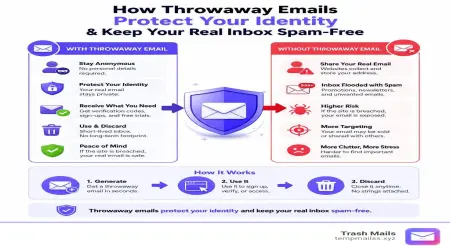
Yes — most of the time. A temporary email address is still a real, working inbox. It can receive any email a normal inbox can, including OTPs (one-time passwords), confirmation links, and signup codes. The website sending the verification email has no idea whether you're using Gmail, Outlook, or a disposable inbox like the ones on tempmailss.xyz. To their system, it's just an email address.
But here's the catch — and this is the part people don't talk about enough — not every platform will let you complete signup with a temp email, even if the code does arrive.
Let me explain both sides because I've run into each of them personally.
When It Works Like a Charm
I've used temp emails successfully for:
- Signing up for free trials I knew I'd cancel anyway
- Downloading an ebook or PDF that required "creating an account"
- Testing whether a coupon code site was legit before using my real email
- Registering on forums I only needed for one specific thread
- Verifying accounts on smaller SaaS tools during a free trial period
In all these cases, the verification code showed up within seconds to about a minute. I copied it, pasted it into the signup form, and moved on with my day. No drama.
When It Doesn't Work (And Why)
Now here's where it gets interesting. Some platforms are smart about this. Big names like Google, Facebook, Instagram, and most banking apps actively block known disposable email domains. They maintain blacklists of common temp mail providers and reject the signup before it even gets to the verification step.
I tried creating a throwaway Gmail account once using a temp email as the recovery address — didn't work. Google flagged it almost instantly with something like "this email type isn't supported."
So the honest truth is: temp emails work great for low-stakes, casual signups, but they're not meant for anything that needs long-term identity verification, like banking, government services, or major social platforms with strict anti-fraud systems.
My Actual Step-by-Step Process When Using a Temp Mail for Verification
If you've never done this before, here's exactly how I do it, no fluff:
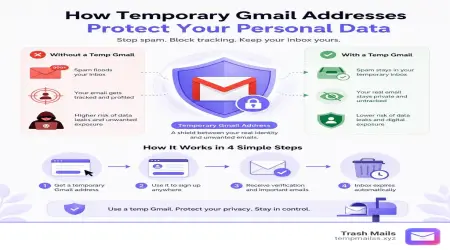
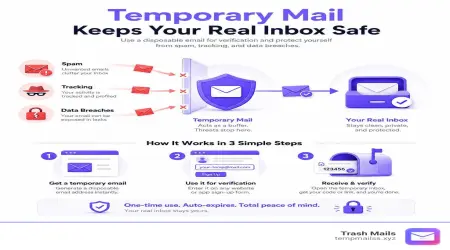
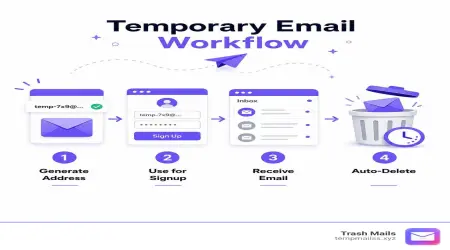
Step 1: Open a temp email site I usually head to a disposable inbox site, grab the auto-generated address (something like xj92kd@tempdomain.com), and copy it.
Step 2: Use that address during signup Paste it into the email field on whatever site or app you're signing up for. Submit the form like normal.
Step 3: Go back to the temp mail tab Don't close it. Keep it open in another tab because this is where your code will land.
Step 4: Wait (sometimes refresh) Most codes arrive within 10–60 seconds. If it doesn't show up automatically, hit refresh on the inbox page once or twice.
Step 5: Copy the code and paste it back Once the email lands, open it, grab the 4-6 digit code (or the confirmation link), and paste it into the verification field on the original site.
Step 6: Done Account verified. No personal email used. No spam folder clutter later.
That's genuinely it. It's not complicated, but there are a few gotchas I learned the hard way.
Mistakes I've Made (So You Don't Have To)
Mistake #1: Closing the tab too early I once closed the temp mail tab thinking the code wasn't coming, only for it to arrive 90 seconds later. Lesson learned — give it at least 2-3 minutes before assuming it failed.
Mistake #2: Using temp mail for something I needed long-term access to I signed up for a project management tool using a temp email because I just wanted to "test it out." A week later I actually liked it and wanted to keep using it — except the inbox had already expired and I couldn't reset my password. Total facepalm moment. Lesson: if there's any chance you'll want to keep the account, use a real email or at least a secondary one you control.
Mistake #3: Assuming all temp mail sites are equally reliable Some disposable email services are slow, some get blocked by major platforms, and some inboxes expire way too fast (like within 10 minutes). I've had codes simply never arrive because the temp service itself was having server issues. If one doesn't work, try a different provider before assuming the website itself is broken.
Mistake #4: Trying to use it for sensitive accounts Don't use a temp inbox for anything tied to money, identity documents, or long-term communication. It's just not built for that, and most services will reject it anyway.
Real-World Scenarios Where Temp Mail Verification Actually Makes Sense
Let me give you a few honest use cases I've personally found genuinely useful:
- Free trial hopping — Testing a tool's premium features without giving up my real inbox to marketing emails forever.
- One-time downloads — Some sites force an email signup just to download a simple PDF or template. A temp email solves that instantly.
- Avoiding spam from shady coupon sites — You know the ones that say "enter your email for 20% off" and then blast you daily afterward? Temp mail handles that beautifully.
- Testing your own app or website — If you're a developer testing signup flows, temp emails save you from creating ten fake Gmail accounts.
- Quick forum or community access — When I just need to ask one question on a niche forum and never plan to return.
What About OTP Codes for Apps (Not Just Websites)?
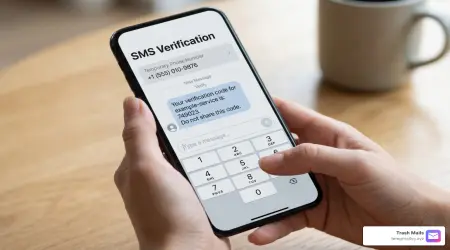
This is where it gets a little trickier. Email-based OTPs work fine with temp mail. But SMS-based OTPs (the ones sent to your phone number) are a completely different thing — temp email won't help you there since it's not a phone number. Don't confuse temporary email services with temporary phone number services; they solve different problems. If an app asks for phone verification specifically, a temp email address won't be of any use for that step.
Quick Tips for Better Results
- Always double-check the inbox hasn't expired before submitting your signup form.
- If a code doesn't arrive in 2-3 minutes, try regenerating a new temp address rather than waiting forever.
- Avoid reusing the same temp address across multiple important signups — some services flag addresses that get reused too often.
- Stick to well-known, stable disposable email platforms rather than random obscure ones that pop up in search results.
- Never use a temp email for anything involving real money, legal documents, or long-term account ownership.
Final Thoughts
Temporary emails are honestly one of those small internet tools that quietly save you a lot of hassle once you know how to use them properly. They do receive verification codes just fine in the vast majority of everyday situations — free trials, one-off downloads, testing things out, avoiding spam. The key is knowing where the limits are. Big platforms with strict security will block them, and anything you plan to use long-term shouldn't be tied to a disposable inbox in the first place.
Once you get the hang of it, it becomes second nature — open the temp inbox, sign up, wait a minute, grab the code, done. It's saved my real inbox from a ridiculous amount of clutter over the years, and honestly, that alone makes it worth keeping in your toolkit.