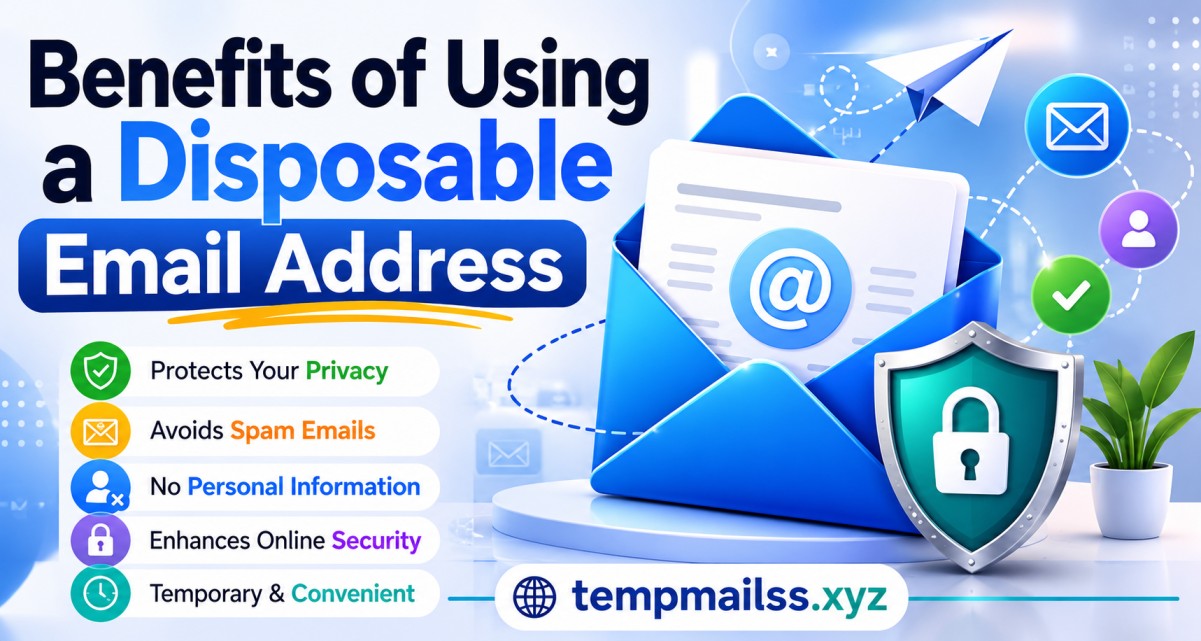
Benefits of Using a Disposable Email Address
My breaking point was a Tuesday morning.
I opened my Gmail — the one I'd been using since college — and I had 47 unread emails. Not one of them was from an actual human being. It was all newsletters, "we miss you" emails from apps I'd tried once, flash sale alerts, and three different companies reminding me my cart was "still waiting."
I hadn't even bought anything. I'd just browsed.
The thing is, I knew exactly how it happened. I'd been casually signing up for things for years. Free trials, downloads, browser extensions, giveaways, online tools — and every single one of them wanted my email first. So I gave it. Over and over. Because what's the big deal, right?
Turns out, quite a lot.
That morning was when I finally got serious about using a disposable email address. Not because I had anything to hide — I really didn't — but because I was tired of my inbox working against me instead of for me.
Here's what I've learned since then, and why I think disposable emails are genuinely one of the most underrated tools on the internet.
Benefit #1: Your Real Inbox Stays Yours Again
This sounds obvious, but it takes a while to really feel how good it is.
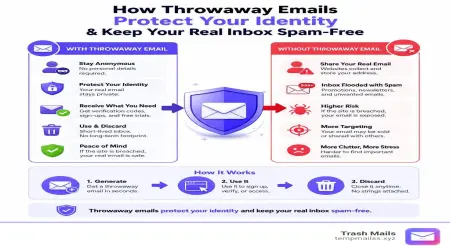
Once you start routing all the "I just need this one thing" signups through a disposable address, your main inbox gets quiet. Like, surprisingly quiet. The signal-to-noise ratio flips completely.
The emails you actually want — from real people, services you use every day, stuff that matters — they show up without getting buried under a pile of "Top Picks For You This Week."
I track this in a pretty unscientific way: I started noticing that I could open Gmail on my phone and actually see what I needed in under 10 seconds. Before, that took scrolling past five things to find the one thing. It's a small change that adds up fast.
Using tempmailss.xyz whenever I don't fully trust a site has made this possible without any extra effort. No filters to set up, no unsubscribe marathon — just don't give them your real address in the first place.
Benefit #2: You Stop Getting Punished for Being Curious
One of the most annoying patterns on the internet is what I call the curiosity tax.
You see an interesting article. It's behind a "free registration" wall. You create an account. You read the article. You never go back. And now, for the next 18 months, that publication emails you three times a week because you "opted in."
Same thing with tools. You want to test a new app to see if it's worth paying for. You sign up with your real email. The free trial ends. You decide it's not for you. But the emails keep coming — upgrade reminders, feature announcements, "we've improved!" updates.
Disposable email breaks this cycle entirely. You get to be curious without consequence. Try the tool, read the article, download the resource — and when you close the tab, that's genuinely the end of it.
I've tried easily 30+ SaaS tools over the past couple of years purely because I knew I wasn't committing my inbox to any of them. Some of those turned into tools I actually love and eventually paid for. I'd never have discovered them if I'd been too cautious to sign up.
Benefit #3: You Get Real Privacy Without Needing to Be "Private"
Here's something most people don't think about: your email address is personally identifying information.
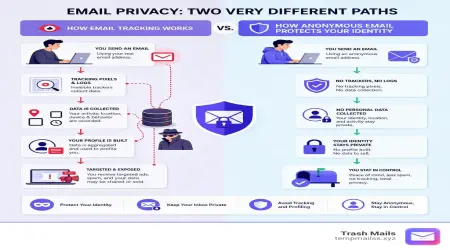
It often contains your name. It's linked to your other accounts. It can be used to find you across platforms, build advertising profiles, and in worst-case scenarios, become part of data broker databases that follow you around for years.
When you use a disposable email, you're not just avoiding spam. You're limiting how much of yourself you expose to every random site you visit.
I'm not talking about doing anything shady. I'm talking about signing up to comment on a blog post, or downloading a free template, or entering an online contest. These are mundane activities — but they all collect data, and that data goes somewhere.
Disposable email lets you engage with the internet without leaving a permanent trail every single time.
Benefit #4: Testing and Building Stuff Gets So Much Easier
This one's for the developers, marketers, and generally tinkery types.
If you've ever needed to test an onboarding email sequence, verify that a signup form actually works, or create multiple accounts to check how a platform handles new users — you already know the pain of needing fresh email addresses fast.
The workaround most people use is Gmail's plus addressing trick (yourname+test1@gmail.com). It works, sort of, but all those emails still land in one inbox and it gets messy quickly. Also, some platforms are smart enough to detect and block plus-addressed emails now.
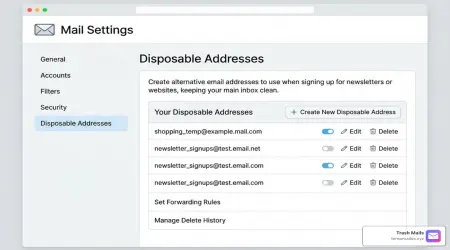
Disposable email services give you a genuinely unique, functional inbox in seconds. Each one is completely separate. No clutter, no confusion. You create the address, use it for the test, and it's gone.
I've used temp mail addresses specifically for:
- Checking that confirmation emails actually arrive and look right
- Testing account recovery flows from a "new user" perspective
- Creating sandbox accounts on platforms for training or demos
- Verifying that a newsletter signup form sends what it's supposed to send
For anyone who builds things on the internet, this is legitimately one of the most useful free tools available.
Benefit #5: You Can Say Yes to Things You'd Otherwise Skip
This one surprised me.
Before I started using disposable email, I'd often see something I was mildly interested in — a free webinar, a downloadable checklist, a limited-time resource — and I'd weigh it up: Is this actually worth giving them my email?
Half the time, the answer was no. Not because the thing wasn't valuable, but because I'd already learned that handing over my email meant consequences I'd be dealing with for months.
With disposable email, that hesitation just... disappears. The cost of signing up drops to basically zero. So I say yes more often. I try more things. I learn more.
It's a weird way to think about it, but disposable email actually made me more willing to engage with the internet, not less.
How to Start Using a Disposable Email (Takes About 90 Seconds)
If you've never done this before, here's exactly how it works:
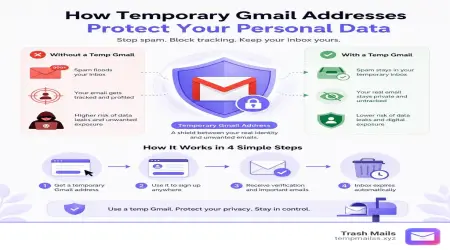
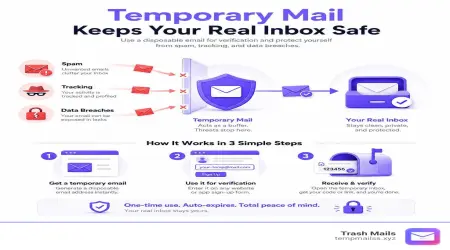
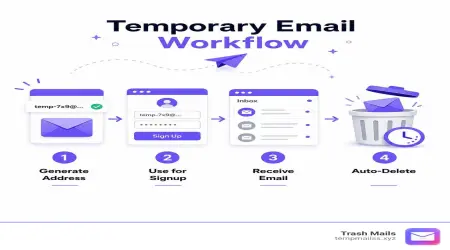
Step 1: Open a new tab and go to tempmailss.xyz.
Step 2: A disposable email address is generated for you automatically. Something random and unique — no signup, no password, no personal info required at all.
Step 3: Copy that address.
Step 4: Paste it into whatever signup form you're filling out on another site.
Step 5: Complete the signup or download or whatever you were trying to do, then come back to your tempmailss.xyz tab.
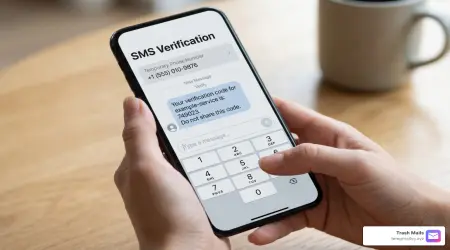
Step 6: Any emails sent to that address — confirmation links, verification codes, download links — will appear right there in the inbox. Click what you need.
That's it. The inbox sticks around long enough for you to grab what you need, and then it expires on its own.
The first time I did this, I genuinely sat there for a second wondering if I'd missed something. I hadn't. It really is that frictionless.
Mistakes That'll Trip You Up (Learned These the Dumb Way)
Using it for accounts you actually care about.
If you're creating an account you plan to use long-term — your Netflix, your Notion workspace, anything tied to payments or saved work — use your real email. You'll need that address for password resets and account recovery, and a disposable inbox won't be there when you need it.
I once signed up for a project management tool with a temp mail address because I was "just testing it." Three weeks later I was genuinely using it and couldn't recover my account when I got locked out. Had to start over from scratch. Frustrating.
Waiting too long to check it.
Verification emails sometimes expire in 10 or 15 minutes. If you switch tabs, get distracted, come back an hour later — the code might be dead. Use disposable email when you're ready to go all the way through the process right then.
Treating it like private or secure email.
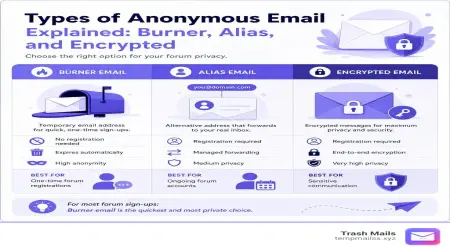
Disposable inboxes aren't encrypted. They're not designed for sensitive information. Don't use one to receive anything that contains passwords, financial data, medical info, or anything you'd actually care about keeping private. It's a convenience tool, not a security tool.
Expecting it to work for everything.
Some platforms specifically check for and reject disposable email domains. It doesn't happen constantly, but it does happen. If a site blocks you, that's usually a good sign they're planning to flood your inbox anyway — but it's worth knowing that temp mail isn't a universal key.
The Real-World Difference It Makes Over Time
Here's what six months of actually using disposable email consistently looks like in practice:
My main Gmail inbox went from averaging around 40+ new emails a day to somewhere under 15. Most of those 15 are things I actually want to see.
I stopped doing the "mass unsubscribe" cleanup ritual I used to do every few months, because there's nothing to unsubscribe from. Those addresses don't exist anymore.
I test tools earlier and more often, which has genuinely helped me find better software for things I was doing inefficiently before.
And maybe most surprisingly — I feel less pestered by the internet. That's hard to quantify, but it's real. There's a low-grade stress that comes from having an inbox that demands constant attention. Removing most of that noise has a weirdly positive effect on how you feel about opening your email at all.
One Last Thing Worth Saying
Disposable email gets a bad reputation in some circles because people assume it's only used for sketchy stuff. But the actual, everyday use cases are overwhelmingly mundane and completely legitimate.
Protecting your inbox. Testing products. Keeping your real identity out of marketing databases. Getting access to a resource without a six-month email commitment. These aren't suspicious activities — they're just smart ones.
If you haven't tried it yet, give it a shot the next time some website asks for your email and your gut says "I don't really want to give this to them." Head over to tempmailss.xyz, grab a free address in two seconds, and use that instead.
Worst case, nothing changes. Best case, you start reclaiming a little bit of control over your own inbox — and that turns out to matter more than you'd think.