Are Temporary Email Services Safe for Online Registrations?
Last month, a colleague of mine refused to use a temp mail service because — and I quote — "it sounds like something hackers use."
I laughed, not because he was stupid for thinking that, but because I used to think the exact same thing. The name itself sounds a little shady. Temporary email. Disposable inbox. It sounds like something from a cybercrime thriller.
But here's the thing: I've been using temporary email services for years across hundreds of online registrations — free trials, forum signups, resource downloads, software testing — and I've never once had a security incident tied to using one. Not a single one.
So the real question isn't whether temp mail sounds sketchy. It's whether it's actually safe to use. And the honest answer is: yes, for the right situations — but there are real limits you need to understand before you start throwing it at everything.
Let me break it all down from actual experience.
What "Safe" Even Means in This Context
Before anything else, we need to agree on what we're asking when we say "safe."
Are we asking:
- Will using temp mail get my device infected with malware?
- Will it expose my personal data?
- Will it make me more or less vulnerable to phishing?
- Can the temp mail service itself be trusted?
These are all different questions with different answers. Most people lump them together and either panic or blindly trust. Neither is useful.
Let's go through each one properly.
Does Using Temp Mail Expose Your Device to Malware?
Short answer: no more than using any other email service, and probably less.
Here's why. When you use a service like tempmailss.xyz, you're not downloading anything. You're visiting a webpage that displays incoming emails. The risk profile is similar to reading any email in a browser — the same as Gmail or Outlook, honestly.
The more relevant question is: what are the emails themselves sending you? If you signed up for something sketchy and they email you a link saying "click here to confirm," you should treat that link with the same caution you'd apply anywhere else. Temp mail doesn't sanitize the content of what lands in the inbox. It just receives it.
So the browser safety rules still apply: don't click suspicious links, don't download attachments from sites you don't trust, and don't enter personal information on pages you're redirected to blindly.
The temp mail itself is just the delivery box. What matters is who's dropping mail into it.
Does Temp Mail Protect Your Personal Data?
This is where temp mail actually shines — and it's the main reason I use it.
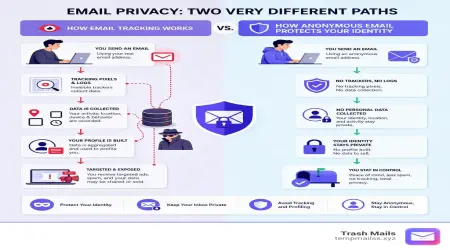
Every time you hand your real email address to a website, you're creating a data point. That data point gets stored somewhere. Maybe it's sold to a marketing list. Maybe the company gets breached three years from now. Maybe they just spam you forever. Any of these things can happen without you ever knowing.
Temp mail cuts that chain completely.
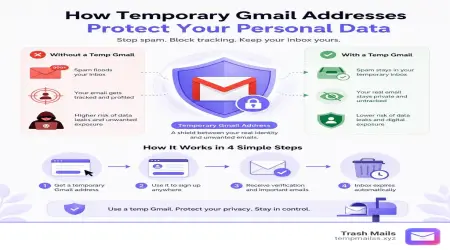
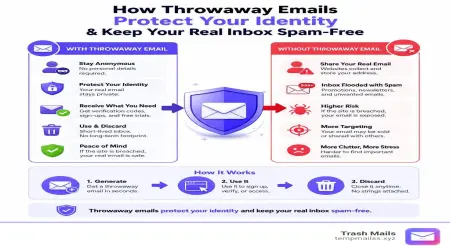
If you sign up for a free PDF download using a disposable address, and that site gets breached tomorrow, what do hackers find in the database? An email address that no longer exists. There's no password tied to it (assuming you didn't set one). There's no account to hijack. There's no trail back to your real identity.
From a personal data protection standpoint, using temp mail for low-stakes signups is genuinely safer than using your real email.
I learned this the hard way. A few years back I signed up for a "free stock photo" site with my real Gmail. A year later I started getting phishing emails that referenced that specific site's branding — telling me my account was suspended and I needed to verify my details. They'd clearly gotten my email from that site somehow, real or scraped. Had I used temp mail, those phishing attempts would have landed in an inbox that no longer existed.
Can Temp Mail Inboxes Be Read by Others?
Here's the honest part that a lot of temp mail articles skip over: yes, technically, they can.
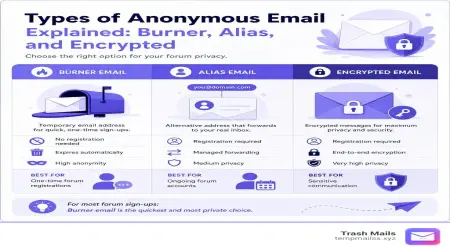
Most temporary email services — including the free ones — don't require any login. Your address is often generated randomly and shared in a URL. If someone knew your exact temp email address, they could potentially visit the same page and see your inbox.
In practice, this almost never matters. The addresses are randomly generated strings. Nobody's going to guess z7rk2@tempmailss.xyz and stumble across your inbox.
But it does mean you should never use temp mail for anything sensitive. Don't receive:
- Password reset links for important accounts
- Bank confirmations
- Legal documents
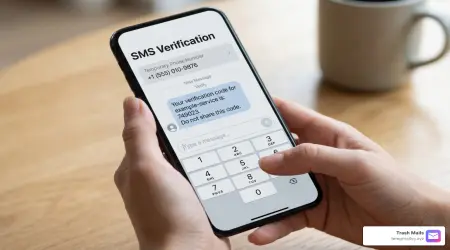
- Two-factor authentication codes for accounts you care about
- Anything you'd be upset about if a stranger read
Temp mail is built for convenience and inbox privacy — not for private, encrypted communication. Keep those two things separate in your head and you'll never run into problems.
Is the Temp Mail Service Itself Safe to Trust?
This is the one that actually deserves some scrutiny.
Not every temp mail provider is created equal. Some are clean, straightforward services. Others exist primarily to harvest metadata — knowing which websites people are signing up for, how email confirmation flows work, what spam looks like in aggregate. That kind of data has value to marketers and researchers.
So how do you pick one you can actually trust?
A few things I look for personally:
No required registration. If a temp mail service is asking you to create an account or verify your identity before giving you a disposable address, something's off. The whole point is anonymity. Walk away.
No aggressive redirects or malicious ads. Some temp mail sites are essentially ad-farms. They'll throw you through multiple redirects, run sketchy ad scripts, or try to get you to install browser extensions. Use a service that's clean and direct.
Readable privacy policy. I know most people skip these. But a quick scroll through a privacy policy tells you a lot. If it's 300 words and says nothing about data retention, that's a yellow flag. If it clearly states they don't log or store email content beyond the session, that's reassuring.
Domain reputation. A temp mail site that's been around for years and has a decent reputation online is far more trustworthy than one that popped up last month. A quick search for "[service name] review" or "[service name] safe" will usually tell you what the community thinks.
Tempmailss.xyz keeps things simple — no signups, no unnecessary data collection, no bloated redirects. That's the baseline you should expect from any service you use for this.
Where Temp Mail Is Genuinely Safe and Smart to Use
Let me give you the specific situations where I'd recommend this without hesitation:
Downloading free resources. Ebooks, templates, checklists, font packs — anything where a site is gating content behind an email form. Use a temp address, grab your file, and leave.
Free trials of software. Especially if you're not sure whether you'll pay for it. Sign up, evaluate the tool, decide later. If you want to upgrade to a paid plan, you can always register a proper account with your real email at that point.
Forum and community access. Testing the waters on a new platform before committing. If the community is good and you want to become a regular, create a proper account then.
Coupon codes and discount signups. Retailers love collecting emails in exchange for a first-purchase discount. Temp mail lets you take the deal without becoming part of their email marketing list permanently.
Testing your own web projects. If you're a developer or designer checking how a registration flow works from a user's perspective, temp mail is invaluable. You can test the full confirmation email sequence without polluting a real inbox.
One-time event registrations. Signing up for a webinar or online event you found through a link, not sure if the organizer is reputable. Temp mail gives you the confirmation without the follow-up spam for the next six months.
Where You Absolutely Should NOT Use Temp Mail
I want to be really direct about this because it matters.
Anything with account recovery. If you lose access to the account later — forgot your password, got locked out — you'll need that email. If it's gone, so is your account. Permanently.
Financial services and shopping. Order confirmations, receipts, and refund requests all go to your registration email. Lose the inbox and you lose the paper trail.
Workplace or school tools. These accounts tie to real identities and often have ongoing communication attached to them. Always use your actual address.
Healthcare or legal platforms. No explanation needed here. Real information, real stakes, real email.
Anything with ongoing notifications you actually want. If you're genuinely interested in the service and plan to engage with it regularly, just use your real email. Or create a dedicated address for newsletters if you're worried about clutter — Gmail filters work well for this.
A Quick Step-by-Step for Safe Temp Mail Use
If you're new to this, here's exactly how I'd walk someone through it:
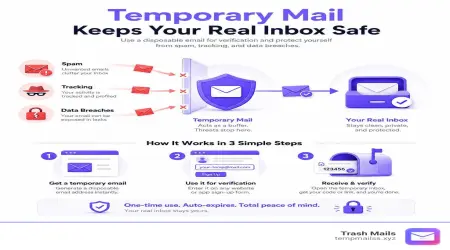
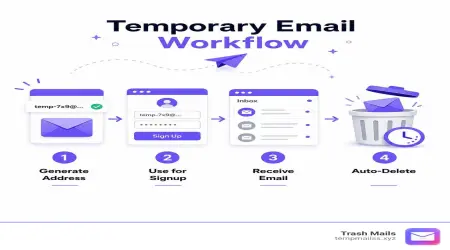
Step 1: Before registering anywhere online, ask yourself: Do I actually need ongoing access to this account? If the answer is no, or you're not sure yet, proceed with temp mail.
Step 2: Open tempmailss.xyz in a separate browser tab. Your disposable address is already there — no setup needed.
Step 3: Copy the address and paste it into the registration form on the site you're signing up for.
Step 4: Complete the signup. Then switch back to your temp mail tab and wait. Confirmation emails typically arrive within 30 seconds to 2 minutes.
Step 5: Click whatever you need — the confirmation link, the verification code, the download button. Done.
Step 6: You can close the tab. The inbox will expire on its own. Nothing to clean up, nothing to unsubscribe from.
That's really all there is to it.
What I've Noticed After Years of Doing This
My main inbox is genuinely cleaner than most people's. I get emails from people and services I actually want to hear from. The signal-to-noise ratio is high because I've been selective about what gets my real address.
The one habit shift that made this stick for me was treating my real email address like a phone number — something I give out deliberately, not reflexively. Temp mail is what I use when someone on the street wants my number but I'm not sure I want to give it.
Some websites block known temp mail domains, and that's completely legitimate — they have good reasons for wanting real, persistent email addresses. When that happens, I just use my real email for that particular signup and accept the tradeoff. No big deal.
But for everything else? Temp mail is one of those small, boring tools that quietly improves your digital life without asking anything of you in return.
If you haven't tried it yet, the bar to entry is basically zero. Head to tempmailss.xyz and there's already an address waiting for you.